Websiteredesign & merkidentiteit voor Lighthouses
- Klant
- Lighthouses
- Gebouwd met
- Figma, NextJS, Tailwind CSS, Google Analytics, Google Tag Manager, Google Search Console, Semrush, Cookieyes
- Doorlooptijd
- 4 weken
- Diensten
- Branding, Webontwikkeling, UI/UX design, SEO, CRO
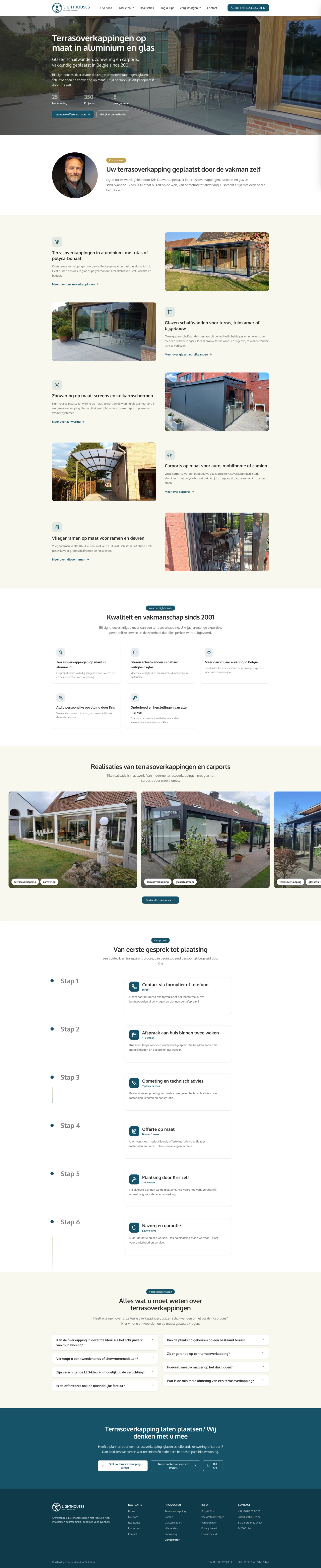
Lighthouses had 20+ jaar vakmanschap, maar een verouderde digitale aanwezigheid. We leverden een volledige rebranding, een Next.js-website, een SEO-fundament en 20+ conversieverbeteringen: een digitale etalage die even betrouwbaar is als hun terrasoverkappingen.
Overzicht
Lighthouses: een online aanwezigheid die even degelijk gebouwd is als de terrasoverkappingen
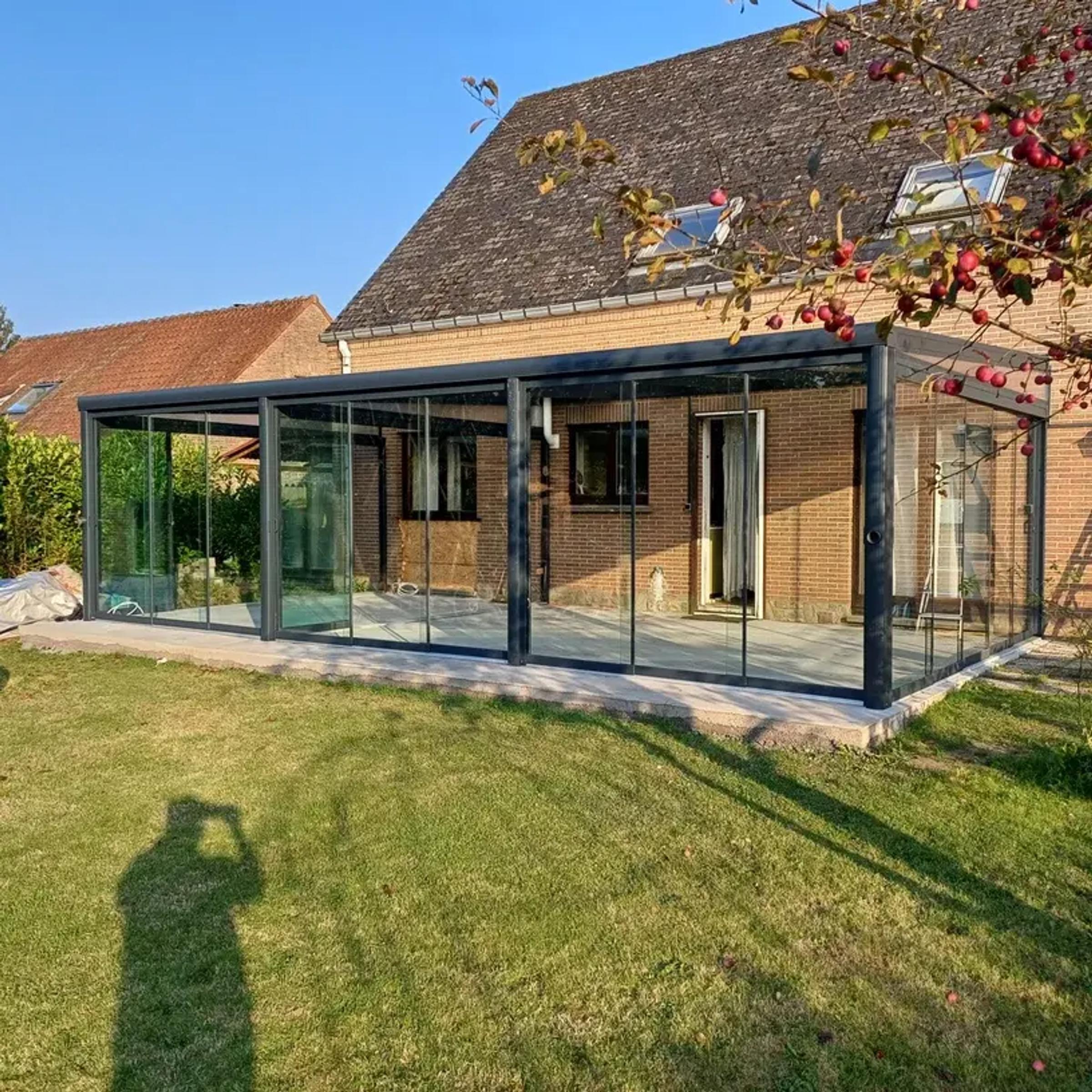
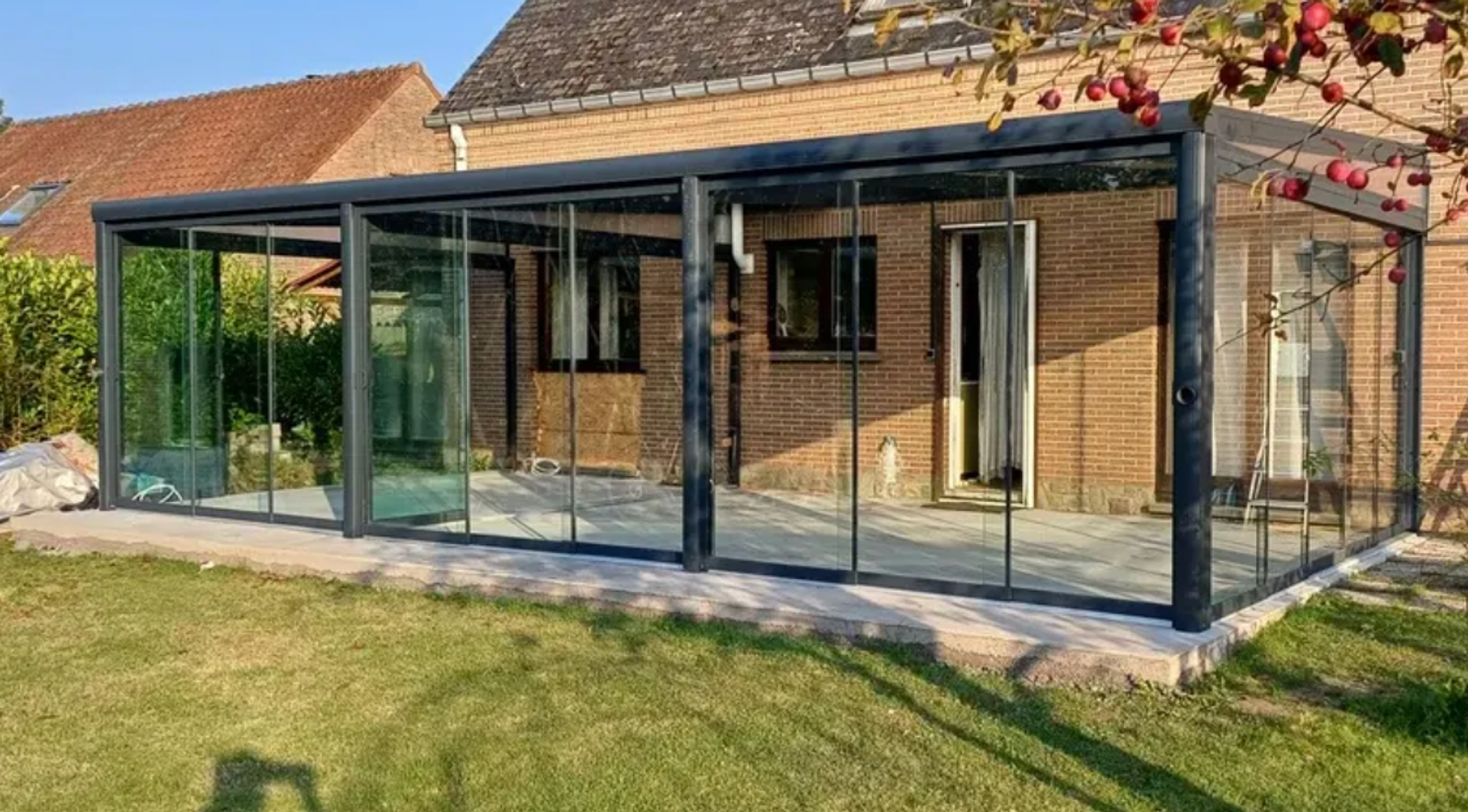
Lighthouses is een Belgische specialist in terrasoverkappingen, carports, glasschuiframen en zonwering. Het bedrijf wordt geleid door Kris Lauwers, die sinds 2001 actief is in de wereld van terrasoverkappingen. Zijn aanpak is heel persoonlijk: hij is aanwezig op elke werf, van het eerste gesprek tot de laatste montage.
De uitdaging
De online aanwezigheid paste niet bij het vakmanschap. De website was verouderd, er was geen merkconsistentie, geen SEO-strategie en geen manier om online leads op te volgen of om te zetten. Voor een bedrijf dat vertrouwen wint met kwaliteit en persoonlijke service, werkte de website actief tegen. Het doel: een online aanwezigheid bouwen die even betrouwbaar en goed afgewerkt is als de terrasoverkappingen zelf.
Een merkidentiteit van nul
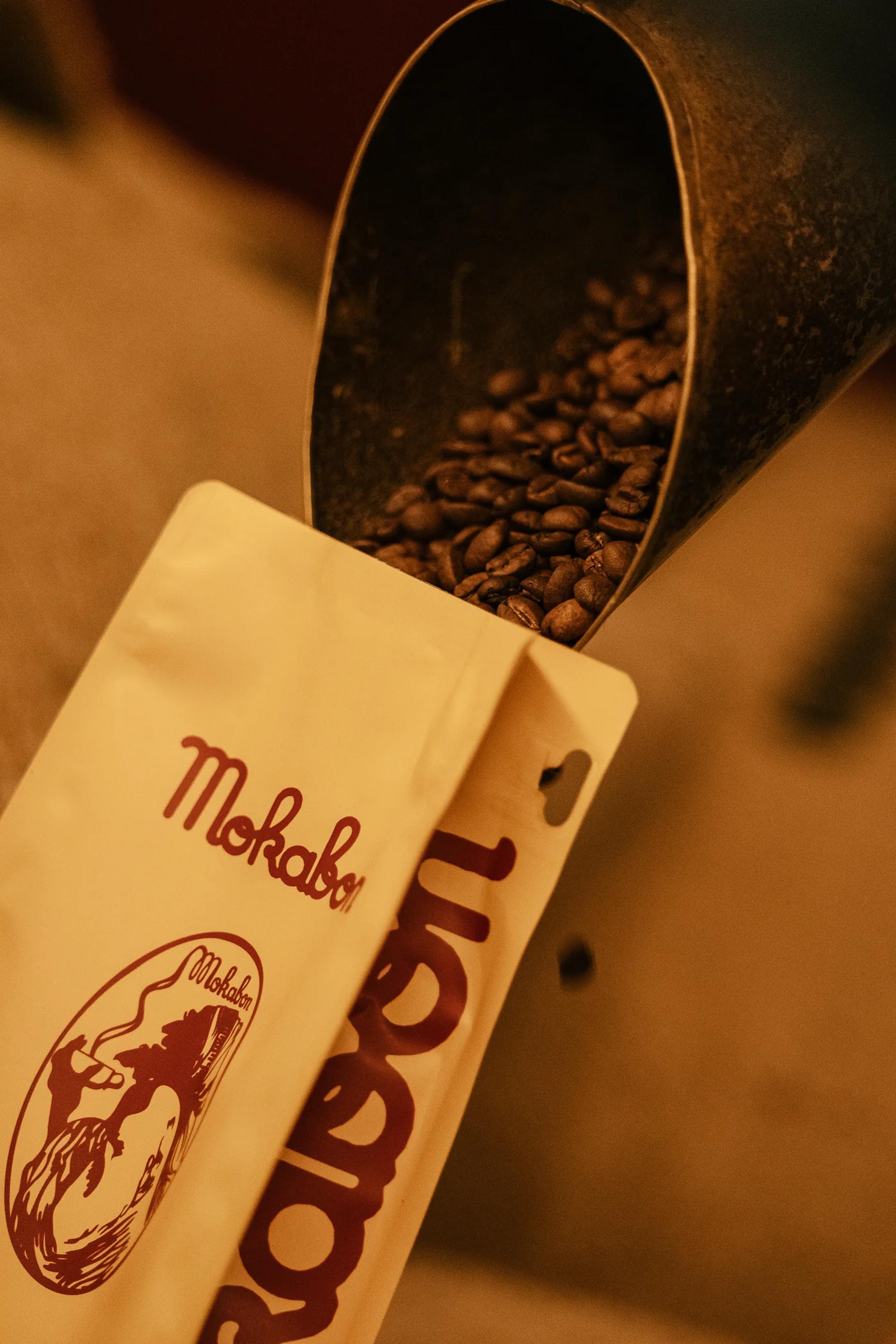
Lighthouses had geen visuele identiteit. We maakten een compact merksysteem: logo, kleurenpalet, typografie en richtlijnen voor gebruik, allemaal ontworpen om vakmanschap en een premium positionering uit te stralen. Het merk werd consequent toegepast op de website, e-mailhandtekeningen, visitekaartjes met een QR-code naar Google Reviews en polo's op maat voor het team.
Volledige website-redesign in Next.js
We bouwden de volledige site opnieuw in Next.js, met aparte pagina's voor elke dienstcategorie: terrasoverkappingen, carports, glasschuiframen, zonwering, vliegenramen op maat, montage, en onderhoud en herstellingen.
De homepage kreeg een duidelijke waardepropositie, een overzicht van de productcategorieën, een transparant proces in 6 stappen van eerste telefoontje tot nazorg, en vertrouwenssignalen. Elke dienstpagina mikt op specifieke lokale zoektermen en is ontworpen om bezoekers om te zetten in gekwalificeerde leads. Een realisatiepagina toont afgewerkte projecten, en de contactpagina heeft een geoptimaliseerd formulier met automatische opvolging per e-mail.
Conversieoptimalisatie: meer dan 20 verbeteringen
Na de eerste oplevering deden we een systematische CRO-review die meer dan 20 concrete verbeteringen opleverde. Veel daarvan werden in dezelfde sprint doorgevoerd:
Sticky bel-CTA op desktop en mobiel, met één tik bel je Kris rechtstreeks
Sticky navigatie bij het scrollen, altijd bereikbaar
Zwevende WhatsApp-knop voor snelle vragen
Validatie van het contactformulier met feedback in het veld en een bevestiging na verzenden
Optimalisatie van de hero-afbeelding, een LCP-fix met fetchpriority en preload hints
Statische Google Maps die pas laadt na een klik, voor snellere pagina's
FAQ-sectie met een toegankelijke accordion (ARIA)
Skip-to-content-link en betere alt-teksten voor toegankelijkheid
Automatisch draaiende hero-slider vervangen door een statische afbeelding, conform WCAG
SEO-fundament
We deden zoekwoordonderzoek voor het volledige productgamma, met de focus op lokale long-tail zoekopdrachten zoals "terrasoverkapping op maat Lier" en "glasschuiframen plaatsen". Elke pagina kreeg geoptimaliseerde metatitels en -beschrijvingen. JSON-LD structured data (LocalBusiness en FAQPage) werd voorbereid om de rich results te verbeteren. Locatiepagina's voor Antwerpen, Gent en Mechelen werden gepland om het geografische bereik te vergroten.
Analytics en tracking
GA4 werd vanaf dag één opgezet met conversietracking. De optimalisatie van het Google-bedrijfsprofiel werd opgestart om lokaal zichtbaar te worden en reviews binnen te halen. Visitekaartjes met een QR-code naar Google Reviews moeten het verzamelen van social proof versnellen.
Het resultaat
Van een vakman die het van mond-tot-mondreclame moest hebben naar een online aanwezigheid die klaar is om te converteren. Een volledige merkkit, meer dan zeven dienstpagina's gebouwd om te ranken, meer dan twintig conversieverbeteringen en tracking vanaf de eerste sprint.
- Klant
- Lighthouses, Lier, BE
- Jaar
- 2026
- Doorlooptijd
- 4 weken
- Diensten
- Branding, Webontwikkeling, UI/UX design, SEO, CRO
Gebouwd met
 Figma
Figma NextJS
 Tailwind CSS
 Google Analytics
- Google Tag Manager
 Google Search Console
 Semrush
 Cookieyes
Het team
 Arthur LauwersOprichter
 Wout BlockxShopify-expert
Hoe we er kwamen
De beslissingen die dit project vormden, in de volgorde waarin we ze namen. Klap er een open om te zien wat die oploste.
Lighthouses had geen visuele identiteit. We maakten een compact merksysteem: logo, kleurenpalet, typografie en toepassingsrichtlijnen, ontworpen om vakmanschap en premium positionering uit te stralen. Consistent toegepast op de website, e-mailhandtekeningen, visitekaartjes met QR-code naar Google Reviews, en polo's op maat voor het team.
Eigen pagina's voor elke dienst: terrasoverkappingen, carports, glasschuiframen, zonwering, vliegenramen, montage en onderhoud. Elke pagina mikt op specifieke lokale zoektermen en is gebouwd om te converteren. De homepage loopt van een heldere waardepropositie naar productcategorieën, een transparant 6-stappenproces en vertrouwenssignalen.
Een systematische CRO-review leverde meer dan 20 concrete verbeteringen op, de meeste doorgevoerd in de eerste sprint. Een sticky telefoon-CTA om met één tik te bellen, een zwevende WhatsApp-knop, een contactformulier met inline validatie en sticky navigatie bij het scrollen. Daarnaast LCP-fixes voor de hero-afbeelding, statische Google Maps met click-to-load en WCAG-toegankelijkheidsverbeteringen.
Zoekwoordonderzoek over het volledige productgamma, met focus op lokale zoekopdrachten met hoge intentie. Elke pagina kreeg geoptimaliseerde metatitels en -beschrijvingen. GA4 werd vanaf dag één opgezet met conversietracking, en JSON-LD gestructureerde data (LocalBusiness en FAQPage) werd klaargezet voor rich results.
Voor en na
Voor
- Geen merkidentiteit, inconsistente visuals op elk contactpunt
- Verouderde website, onzichtbaar in zoekresultaten voor lokale zoekopdrachten met hoge intentie
- Geen analytics, geen conversietracking, geen gestructureerde intakeflow
Na
- Samenhangende brand kit toegepast op website, e-mail, merchandise en visitekaartjes
- 7+ geoptimaliseerde dienstenpagina's die scoren op lokale longtail-zoekwoorden
- GA4-tracking, WhatsApp-CTA, sticky navigatie en 20+ UX-verbeteringen