- CRO
Social proof examples: 10 patterns from 36 leading online brands
We studied 62 pages from 36 leading brands: which social proof works, with screenshots and Shopify tips. Plus the tricks that are not social proof.

By Arthur LauwersFounder
Sees the whole floor. Calls the play, picks the shot, keeps the scoreboard honest.
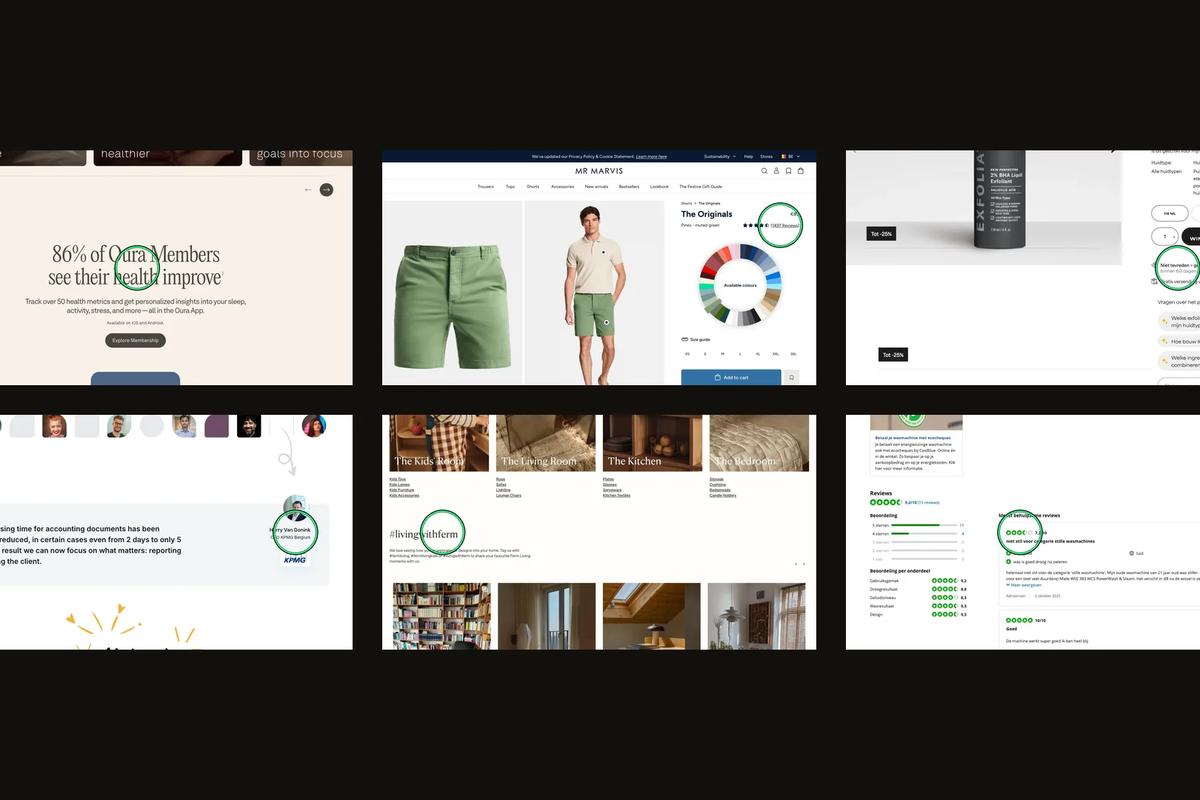
Social proof is evidence from other people that your online store can be trusted: reviews, customer numbers, stores, certifications and famous faces. We studied 62 pages from 36 leading brands and made 511 annotations. The main lesson: the best brands show proof you can check, with numbers and real people. Countdowns and strikethrough prices are not social proof.
This article is part of our overview on growing with SEO, CRO and marketing. For each pattern you get a screenshot, what the brand does and how to apply it on Shopify. Researched on 9 November 2026.
Want to know which patterns your own store is missing? Have our CRO team review your product pages.
How we did this research
On 9 November 2026 we captured the homepage and a product page of 36 brands across 8 industries: fashion and footwear, beauty and personal care, home and interior, food and drink, health and wellness, retail and marketplaces, mobility, and software and services. Everything was viewed from Belgium on a 1440 pixel wide desktop screen. On every screenshot we marked what is meant to build trust: 511 annotations in total.
For the numbers in this article we use the 26 brands where we studied both the homepage and a product page, good for 427 annotations. This is qualitative research: we count what is visible on the page, we do not measure conversion.
What 26 brands show to win trust
16 of the 26 brands point to physical stores or a showroom, including brands that mainly sell online. 13 show a star rating with the number of reviews on the product page. 11 build a community with customer photos or a club, and 11 show job openings. 6 brands show no reviews at all on their product page.
Shoppers think the same way. In the Black Friday study by BCG (November 2026, 10,220 consumers in ten countries) retailer reputation and a money-back guarantee get the highest net trust score, 65 percent each. Verified purchase reviews get 59 percent. Real-time scarcity messages get 8 percent.
The 10 patterns, with examples
1. Numbers beat adjectives
"The best ring" says nothing. "86% of Oura Members see their health improve" does, especially with a footnote: the number comes from a survey of 3,501 members after 30 days. Typology puts "555063 avis cinq étoiles" as a headline on its homepage.
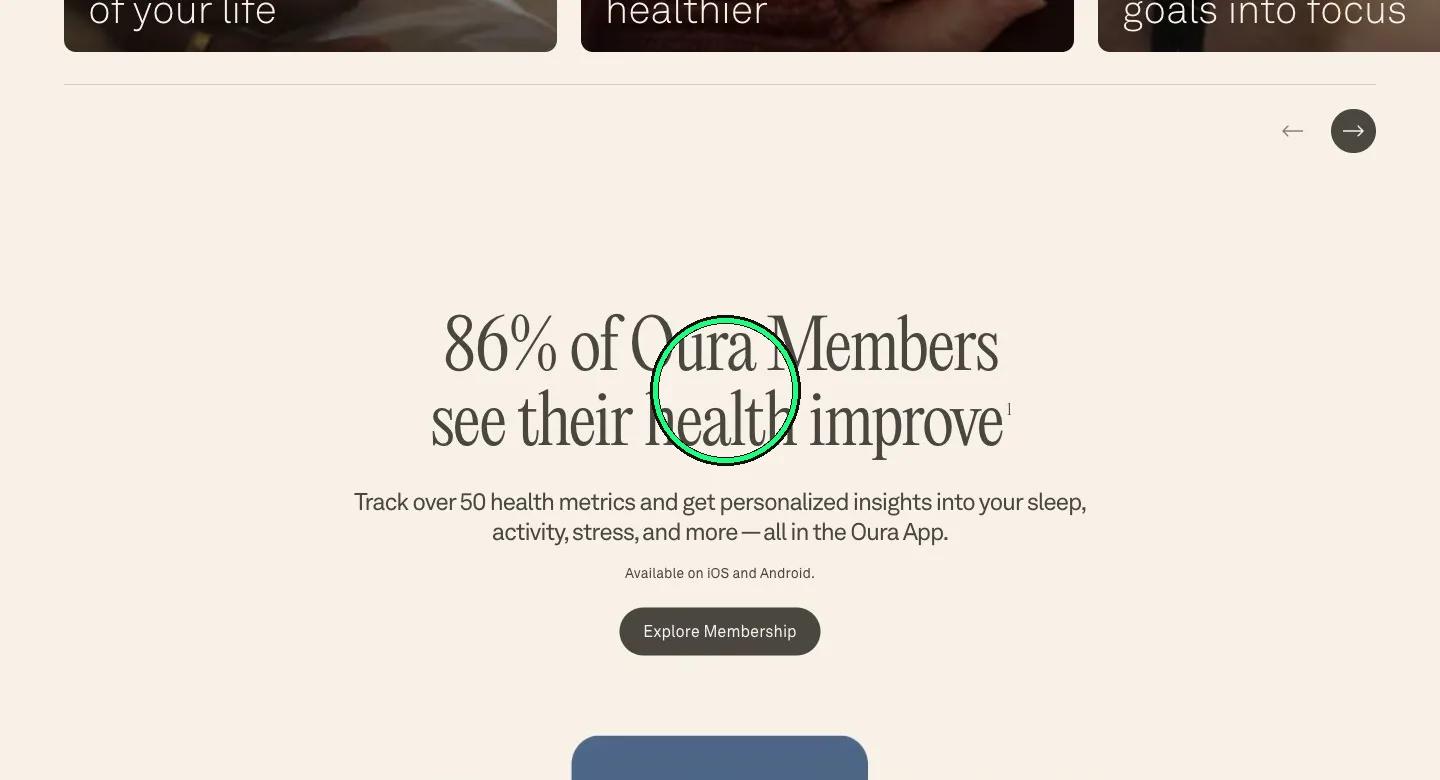
On Shopify: put your strongest number (customers, reviews, items sold or years) in the hero and on the product page, and say where it comes from.
2. Stars plus a count, everywhere
Mr Marvis shows 4.5 stars and 1,497 reviews right next to the product name. A score without a count is worth little: 4.8 from 6 reviews convinces nobody. 13 of the 26 brands show stars with a count on the product page.
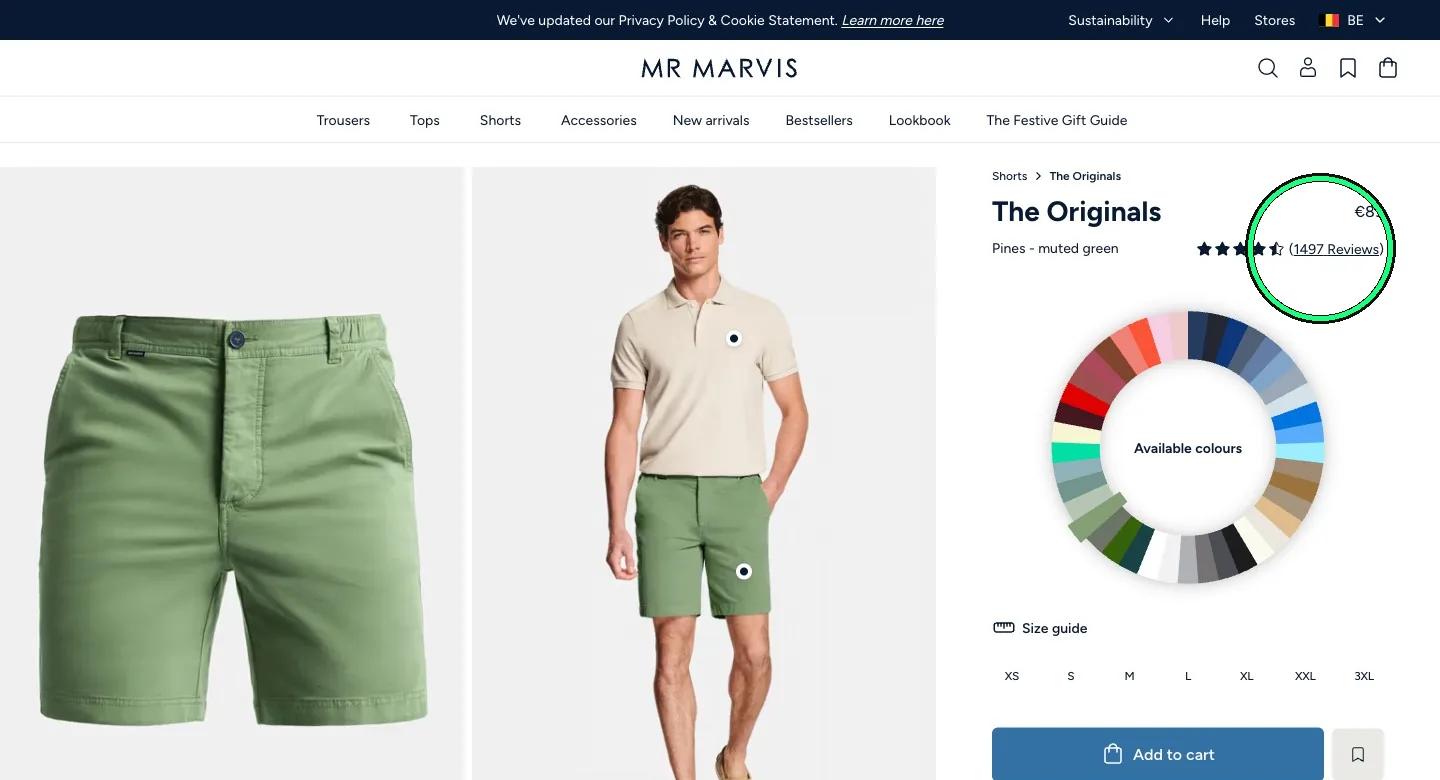
On Shopify: a review app such as Judge.me, Yotpo or Okendo puts stars and counts on your product cards and product page, and passes them to Google as structured data.
3. Make the reviews believable
Coolblue puts a critical 7.2/10 review at the top of the most helpful reviews, lists pros and cons from its own specialist and even shows products with 0 reviews. Glossier, Typology and Rhode show the buyer's skin type, age or shade with every review, and Typology lets you filter on them: reviews from people like you.
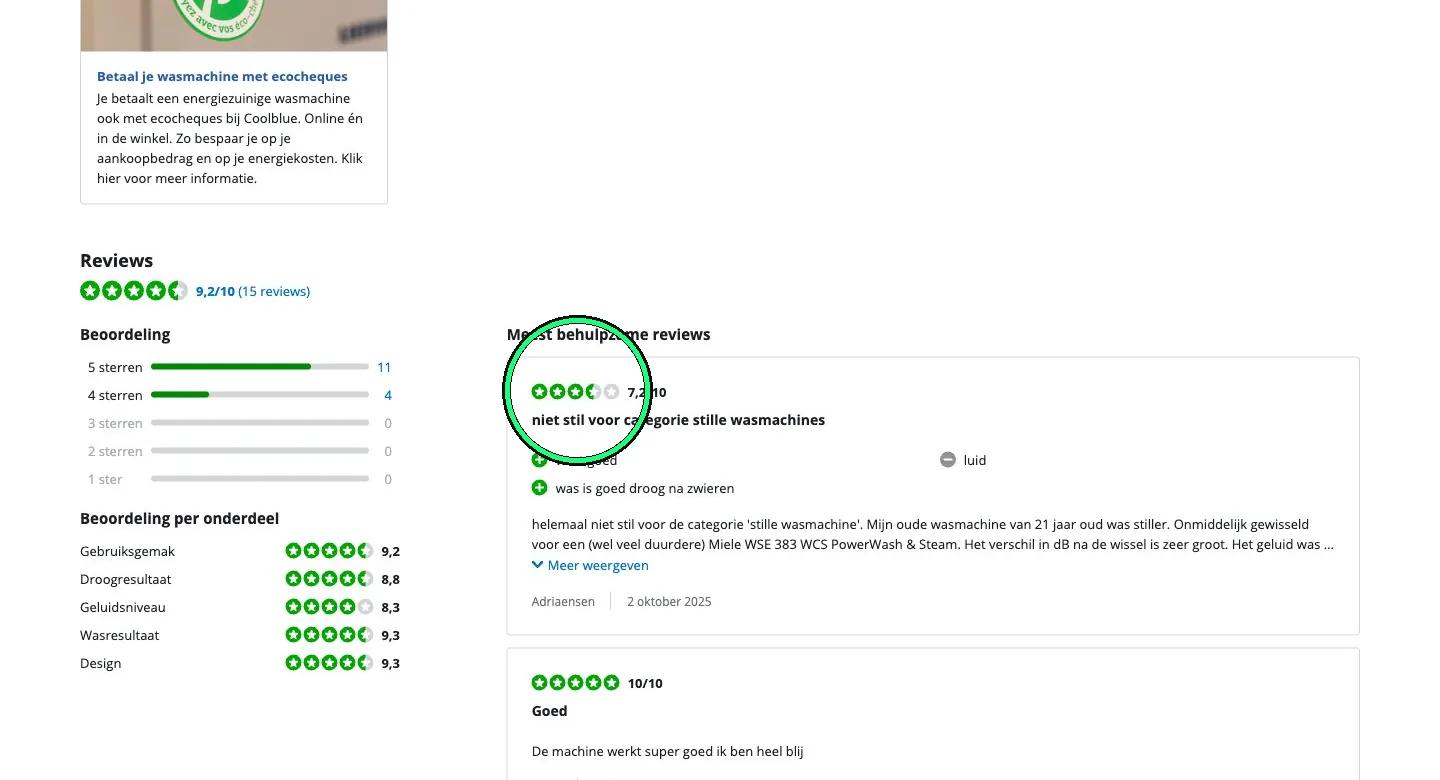
On Shopify: show the score distribution, do not hide negative reviews and ask for attributes in your review form, such as size, use or skin type.
4. Show the crowd
Snocks shows "Mehr als 2.574.368 Mal gekauft" (bought more than 2.5 million times) with small faces under the buy button. Bestseller badges, trending filters and sold-out sizes do the same: they show that others already chose.
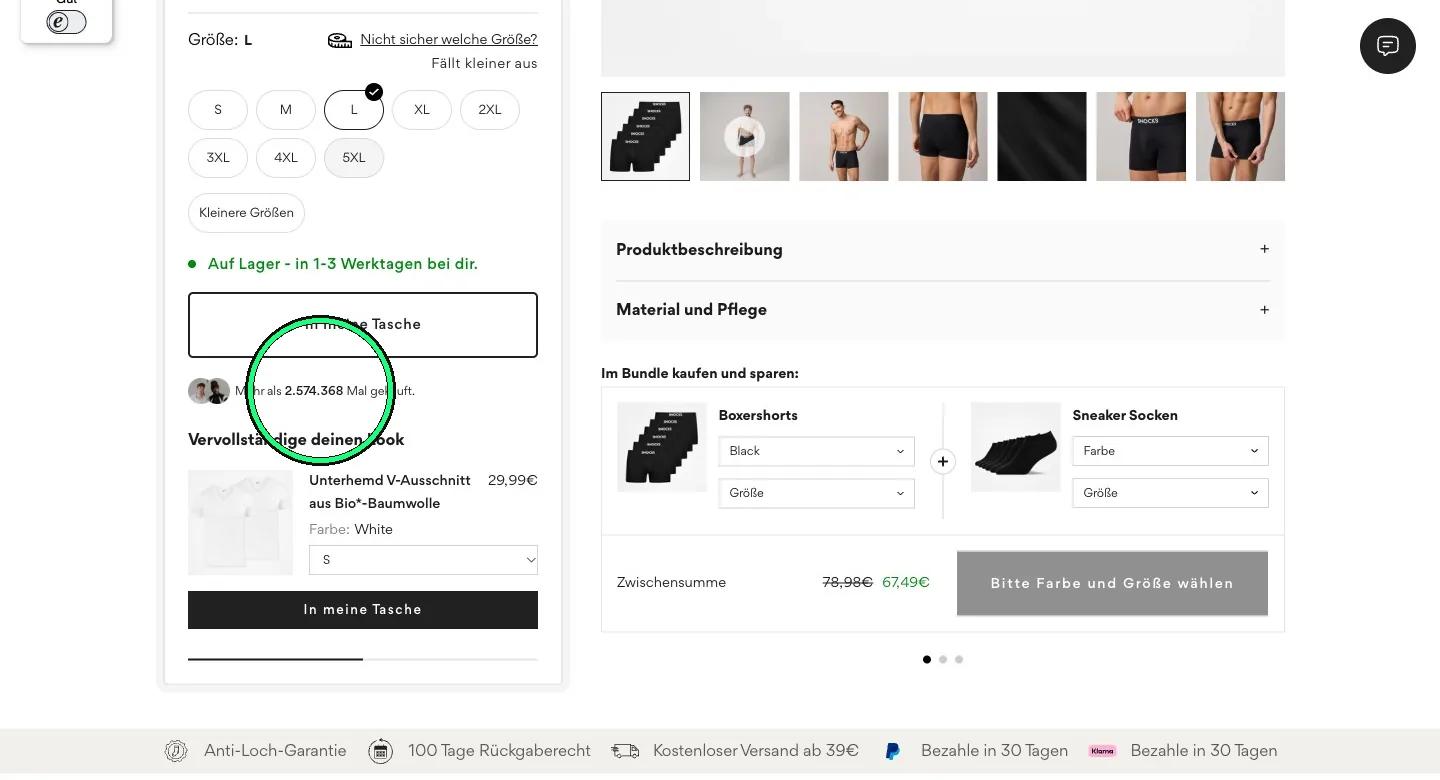
On Shopify: build a Bestsellers collection on real sales and add badges with metafields. We advise against live counters such as "3,200 people viewed this": shoppers trust them the least.
5. Borrow authority
Odoo puts a quote from the CEO of KPMG Belgium, with photo and logo, on its homepage. Other brands borrow authority from awards such as Allure Best of Beauty (Rhode, Glossier), press such as The Guardian and CNET (Oura) or known partners such as Heineken (Filling Pieces) and TENCEL (Allbirds).
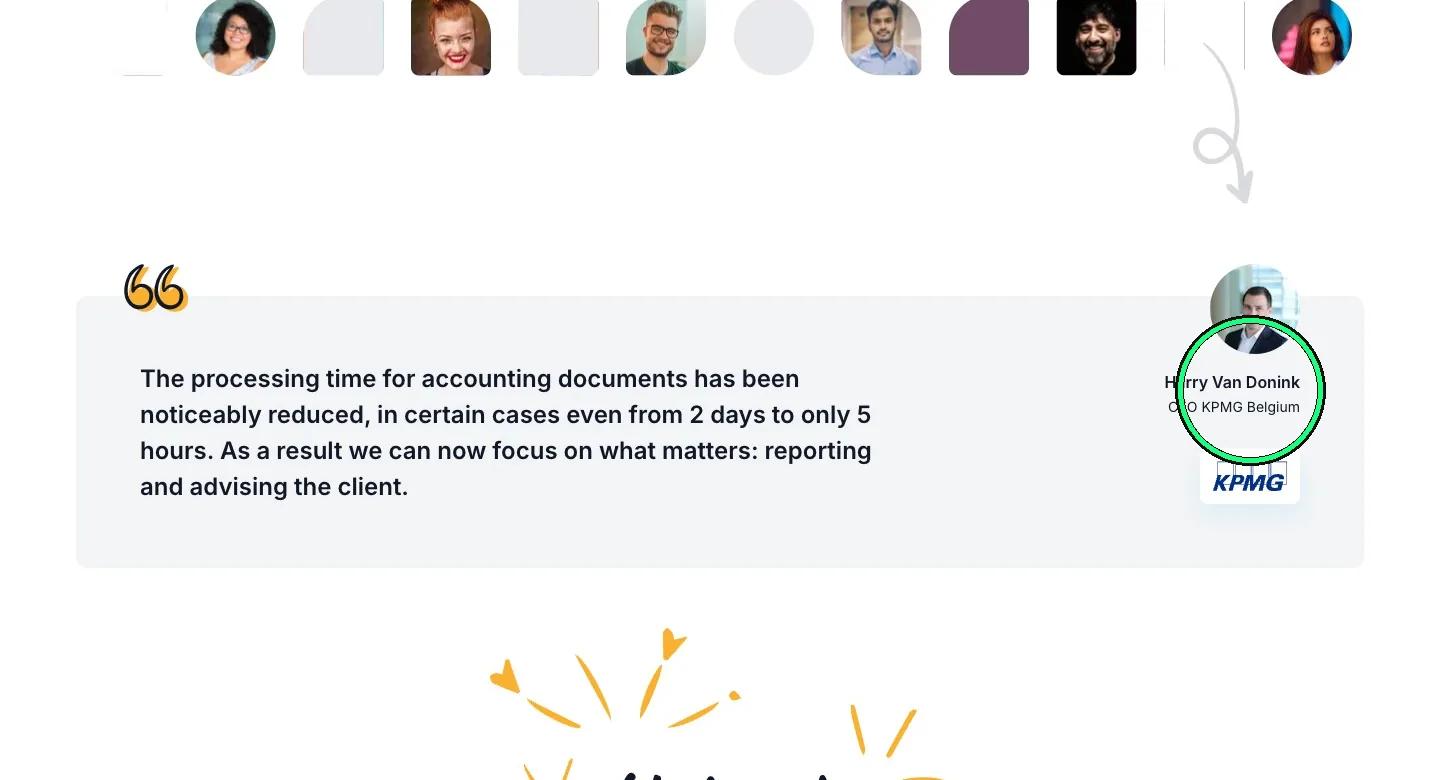
On Shopify: a row of press or partner logos only works with real names people can check. Add name, role and company to every quote.
6. Official and safe
Westwing shows Bancontact, Klarna and bpost at the bottom of the page. For a Belgian shopper, a familiar payment logo is a form of trust in itself. 7 brands show a B Corp badge, others Fairtrade or the Trusted Shops seal.
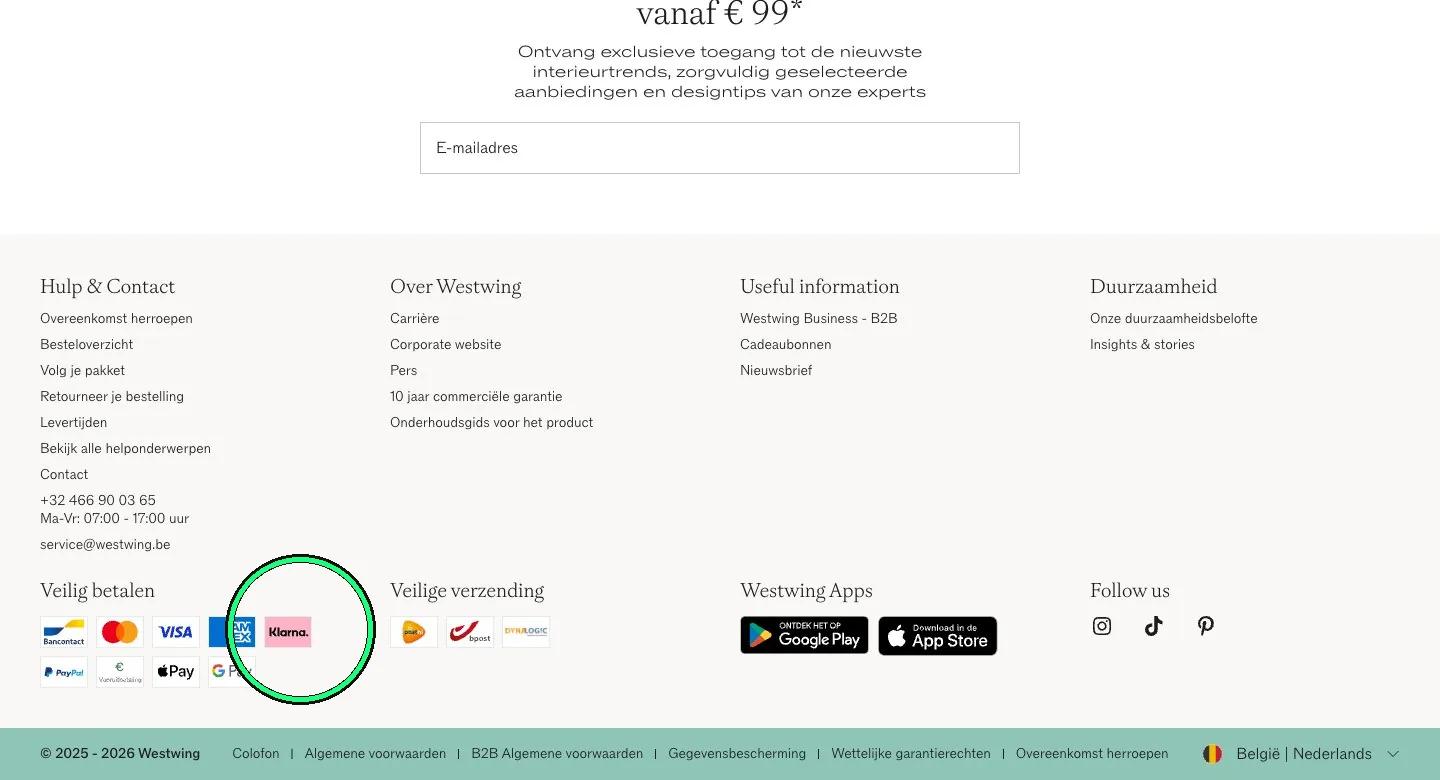
On Shopify: show the payment methods your customers know near the buy button and in your footer. In Belgium, Bancontact belongs there.
7. Science with a footnote
Oura backs its accuracy claims with a footnote to a peer-reviewed study, with a DOI link. Paula's Choice cites studies with 29 to 33 participants. Six brands, all in health and beauty, use clinical claims with a source.
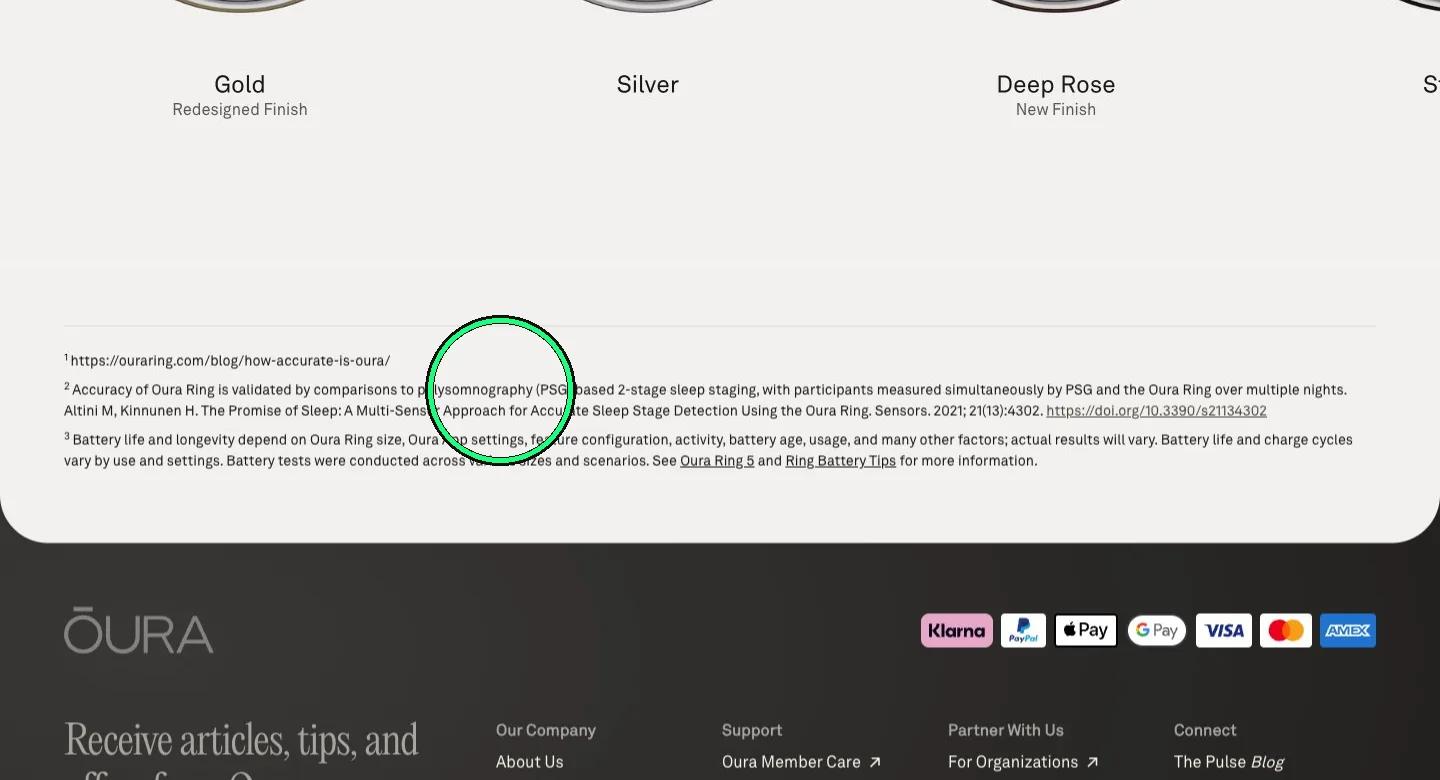
On Shopify: a claim without a source is just a claim. Put the source in a footnote or in a tab on the product page.
8. Signals of a real company
Coolblue lists all 13 of its stores in the footer and marks new ones with "Nieuw!". Of the 26 brands, 16 point to stores or a showroom, 11 show job openings and 7 offer a phone number, WhatsApp or chat with real people.
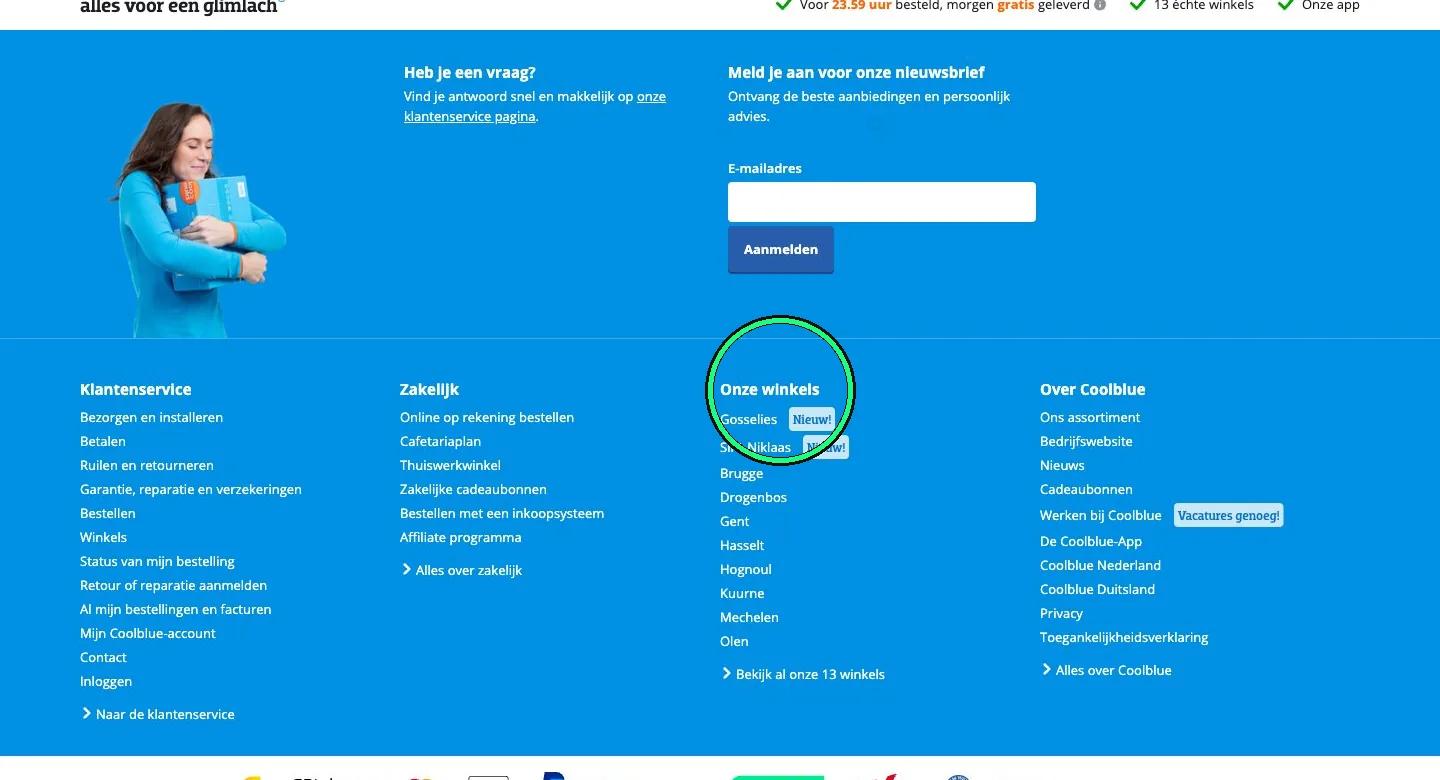
On Shopify: put your address, phone number with opening hours, stores and jobs in your footer. A store with a face and an address feels less risky.
9. Remove the risk at the buy button
Paula's Choice puts "Not satisfied = money back within 60 days, even if the product was used" right under the buy button. The Ordinary gives 365 days to return, Snocks 100 days. 9 of the 26 brands put a guarantee like this close to the buy button.
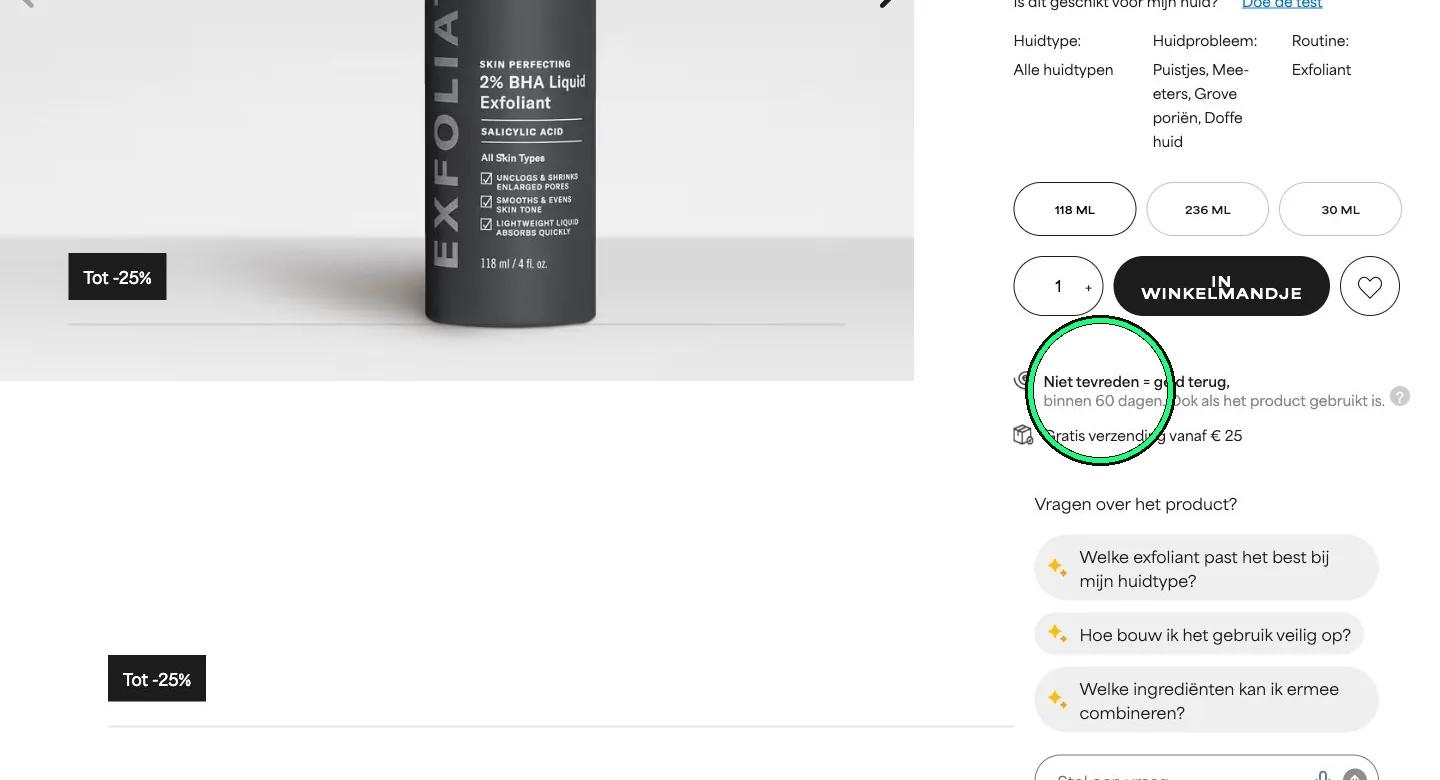
On Shopify: repeat your return period and guarantee in a small block under the buy button. More ideas in our guide to checkout optimisation for Shopify.
10. Community over testimonials
Under #livingwithferm, Ferm Living shows real customer interiors with their Instagram handles, with a "shop the look" on every photo. 11 brands build a community like this: clubs, customer photos or membership programmes.
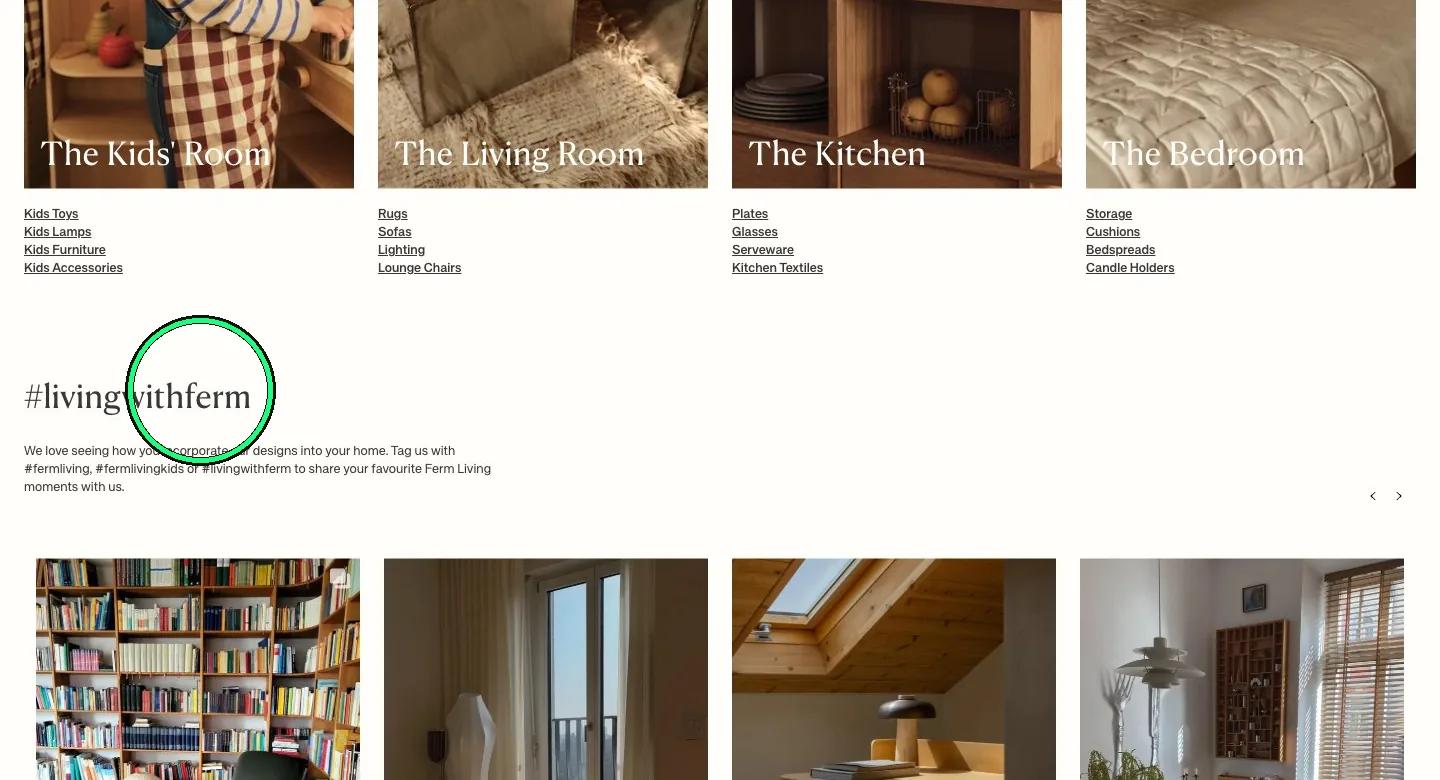
On Shopify: a UGC app pulls tagged Instagram posts onto your product page. Ask customers for a photo after delivery, with their permission.
Brands that show no reviews
6 of the 26 brands show no reviews at all on their product page: Sézane, Tony's Chocolonely, Allbirds, HAY, Ferm Living and Oura (on the ring page). They let something else do the work. Sézane shows sold-out sizes with a button to set an alert. Tony's lets its mission speak: a fair price for cocoa farmers, traceable from bean to bar and Fairtrade.
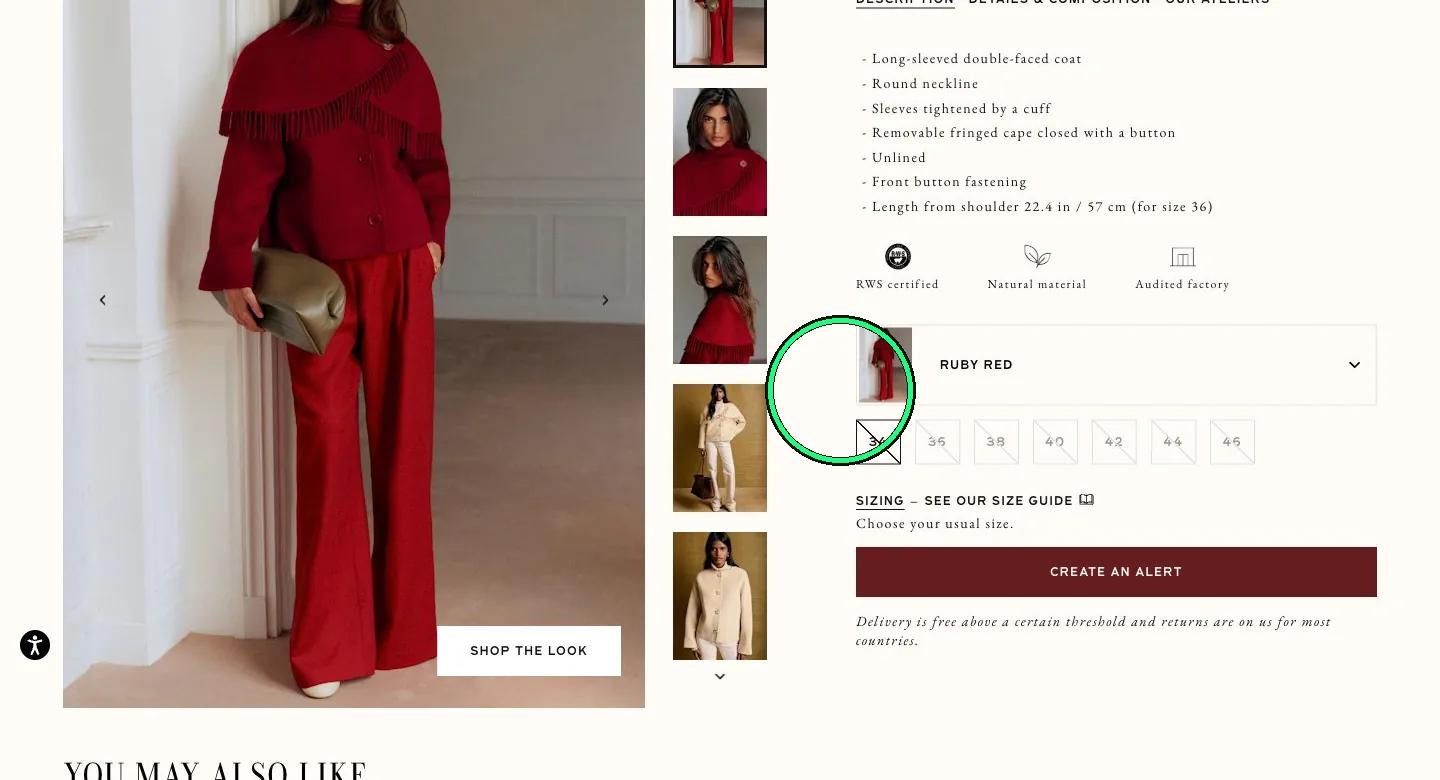
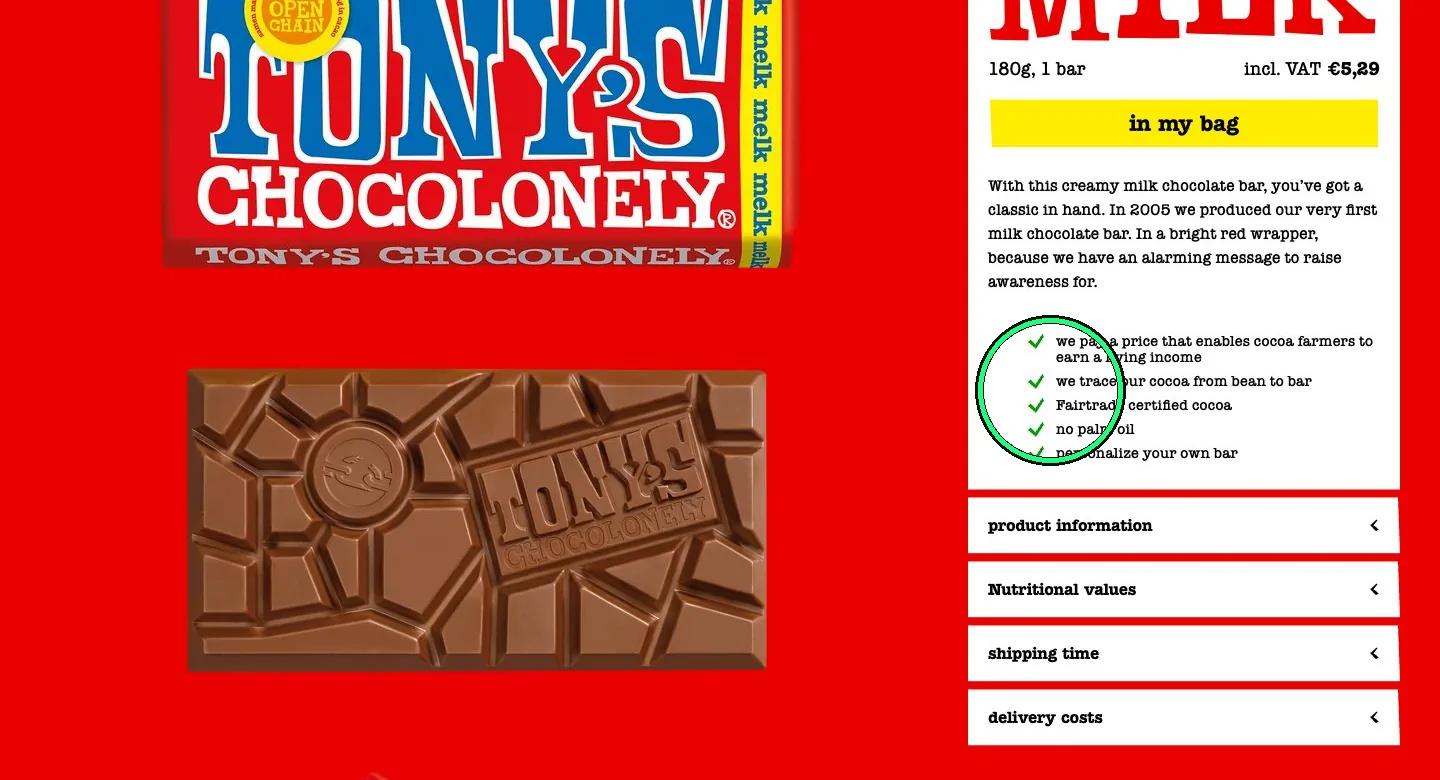
That works for brands that are already known and wanted. A young brand has not built that trust yet, so it needs reviews even more.
Handle with care: tricks that are not social proof
10 of the 26 brands use strikethrough prices or a "worth" amount. 7 use scarcity labels such as "limited", "final few" or "ends Sunday". That is price anchoring and urgency, not proof from other customers. We deliberately do not name those brands here: many of these promotions are correct, but you need to know the rules.
Since the EU Omnibus Directive, a strikethrough price must be the lowest price you charged in the 30 days before the discount. Fake reviews are banned, and so is presenting reviews as coming from buyers without checking that. In a check by the Belgian FPS Economy around Black Friday 2025, 16 of the 23 webshops checked in Belgium broke the rules.
The EU is also working on the Digital Fairness Act, which aims to tackle misleading web design (dark patterns) more firmly. The European Commission's proposal was expected in the fourth quarter of 2026.
Checklist for your own store
Show stars with the number of reviews on product cards and on the product page.
Put one strong, checkable number in your hero, with its source.
Keep critical reviews visible and ask for attributes such as size, use or skin type.
Put your guarantee, return period and familiar payment logos under the buy button.
Show you are a real company: address, phone, stores, team and jobs.
Only use strikethrough prices with the lowest price of the last 30 days.
Replace fake urgency with real scarcity, or drop it.
Test what you change with an A/B test and steer on your conversion rate, not on gut feeling.
How 6th Man helps
6th Man is a Shopify agency from Ghent, Belgium. We review your homepage and product pages the same way as in this research: which proof is missing, what works against you and what to test first. Then we build the changes into your Shopify theme. Book a call about your product pages.
For press and media
Journalists may use the numbers and screenshots from this research with the credit "6th Man (6thman.digital)". Want the full dataset, more examples or a comment from Arthur Lauwers? Get in touch via our contact page.
What people ask about this.
Social proof is evidence from other people that your store can be trusted. Think of reviews with a count, the number of customers, physical stores, certifications, press mentions, famous faces and customer photos. It helps a hesitant visitor to buy.
No. In our research 6 of the 26 brands showed no reviews on the product page, such as Sézane and Tony's Chocolonely. These brands are already known and let their brand, mission or sold-out sizes speak. A younger brand usually does need reviews.
Yes, but in the EU the strikethrough price must be the lowest price you charged in the 30 days before the discount. That follows from the Omnibus Directive. A recommended retail price you never charged cannot be shown as the previous price.
You can show real scarcity. A timer that restarts every day, or "almost sold out" without reason, is misleading. Shoppers also trust real-time scarcity messages the least: in the BCG study of November 2026 they got a net trust score of 8 percent.
We build, migrate and grow Shopify stores.
One team for the build, the move to Shopify and the growth after launch, so nothing gets dropped at a handoff.

Read also

- Ads
- Ecommerce SEO
- Tracking and data
Performance Max explained: assets, audience signals, and control levers
Learn what Performance Max is, how it works across Google channels, which assets and audience signals to use, and what control levers still matter.
 Arthur Lauwers
- Ecommerce SEO
- Shopify
ecommerce seo checklist: speed, schema, and content fixes
Use this ecommerce SEO checklist to fix speed, schema, and content issues holding back your store. Practical, low-fluff wins for European ecommerce teams.
 Wout Blockx

- Tracking and data
How does server side tracking work?
Learn how server side tracking collects data, improves accuracy, and protects privacy. Practical setup steps, pros and cons, and when to move server side.
Wout Blockx