Ahrefs and SISTRIX both serve serious SEO teams, but they are optimised for different markets, workflows, and reporting needs. Your choice should match where you operate, how you work week to week, and which metrics your leadership trusts.
Ahrefs excels at global backlink analysis, rapid keyword discovery, and reverse-engineering competitor strategies across many markets.
SISTRIX shines in European search with its stable Visibility Index, deep country datasets, and clear, comparable reporting for C-level stakeholders.
Ahrefs suits link-heavy, content-driven strategies and international hubs, while SISTRIX fits multi-country B2B, SaaS, and ecommerce teams focused on visibility trends.
For many European brands, 6th Man typically uses SISTRIX as the core reporting source, then layers tools like Ahrefs where extra backlink depth is needed.
Choosing between Ahrefs vs SISTRIX matters most when your team treats SEO as a measurable growth channel, not a side project. Both platforms deliver enterprise-grade data on keywords, backlinks, and rankings, but they differ sharply in interface design, data focus, and pricing structure. Ahrefs excels at global backlink analysis and content discovery, making it the default for many English-speaking markets. SISTRIX brings unmatched visibility tracking and German-market depth, alongside a modular pricing model that suits lean teams who need specific capabilities rather than a bundled suite. The right choice depends on where you operate, what workflows you run daily, and which metrics your leadership actually uses to track performance. This guide compares pricing, core features, and real-world scenarios to help growth-focused businesses make the smarter pick.
What Ahrefs and SISTRIX actually do
Ahrefs is an all-in-one SEO platform built around one of the largest commercial backlink indexes on the web, with tools for keyword research, competitor analysis, rank tracking, and technical audits in a single subscription. SISTRIX started in Germany with a strong focus on its Visibility Index, a proprietary metric that tracks domain performance across thousands of keywords per country, and it splits its product into modules like SEO, Links, Optimizer, Ads, and Social so you only pay for what you use.
Both tools cover the essentials, but their data philosophy differs. Ahrefs prioritises breadth and real-time crawling to show very fresh backlink and keyword data across global markets. SISTRIX prioritises stability and comparability, especially in European search, so your weekly Visibility Index becomes a clear KPI for C-level reporting without daily noise. At 6th Man, we plug these tools into a broader growth stack and often lean toward SISTRIX for European brands, because its Visibility Index is a more reliable indicator of organic performance than anything Ahrefs offers out of the box.
SEO tools for real growth
Ahrefs vs SISTRIX for European growth teams
A practical comparison for founders, SEO leads and ecommerce operators who treat SEO as a measurable acquisition channel. Ahrefs prioritises scale and freshness. SISTRIX prioritises stability and European accuracy.
6th Man comparison
Category
Ahrefs
SISTRIX
Overall philosophy
All in one SEO suite focused on global backlink data, keyword research, rank tracking and content discovery.
SEO toolbox built around the Visibility Index, a stable metric for tracking domain performance across European markets.
Strength in markets
Very strong in English speaking regions and global markets. Large backlink index and broad international keyword data.
Unmatched depth in Germany, France, Spain, Italy, UK and Benelux. Best in class for European search visibility.
Data coverage and freshness
Massive crawler updates backlinks continuously. Very fresh link and keyword data across global markets.
Weekly Visibility Index updates for stability, daily rank options for high priority keywords. Focuses on accuracy rather than noise.
Keyword research
Large keyword database, strong for long tail and competitive analysis across international markets.
Deep curated European datasets, often surfaces long tail and country specific SERP features that global tools miss.
Backlink analysis
One of the largest backlink indexes. Excellent for competitor link auditing, prospecting and link intersect analysis.
Solid backlink module, but more limited compared to Ahrefs. Suited for visibility analysis rather than outreach heavy strategies.
Rank tracking
Updates every three to seven days depending on plan. Supports on demand updates and API pulls.
Visibility Index updated weekly. Daily keyword tracking available. Very strong cross country comparability.
Technical SEO
Site Audit detects errors, broken links and performance issues with global scale crawling.
Optimizer module provides clear, actionable audits with simple reporting for stakeholders.
Everyday workflows
Excels at competitor teardown, backlink strategy, content gap analysis and international keyword discovery.
Excels at visibility tracking, multi country reporting, stable KPI dashboards and keyword intelligence for European SEO.
Pricing structure
Tiered USD plans. All features bundled. Additional users and higher limits increase costs quickly.
Modular pricing in Euros. Pay only for SEO, Links, Optimizer, Ads or Social. Extra users affordable. Easy to scale.
Limits and caps
Limits on reports, projects, rows and keyword tracking apply. Upgrades can be steep.
Projects, crawl credits and SERP updates scale per module. Research queries effectively unlimited.
Best for B2B and SaaS
Strong when link building, PR outreach and global competitor analysis are core parts of the strategy.
Best for multi market SaaS strategies across Europe where leadership wants stable visibility metrics.
Best for ecommerce
Great for granular keyword research, buying guides, comparison content and link driven category growth.
Best for tracking overall organic performance across thousands of product pages with a clean visibility metric.
Drawbacks
Costs rise quickly with usage. Daily fluctuations can create noise. European visibility data less structured.
Backlink data less extensive than Ahrefs. No content discovery suite. Global markets less covered.
Real world ROI
High ROI when backlink analysis and competitor teardown drive your strategy.
High ROI when reporting accuracy, stable KPIs and European market coverage matter most.
SISTRIX vs Ahrefs: two SEO platforms with very different philosophies
At first glance, Ahrefs and SISTRIX appear to solve the same problem. Both promise visibility into rankings, competitors, backlinks, and technical issues. In practice, they are built around very different ideas of what good SEO data looks like, and that difference matters once SEO becomes a serious growth channel rather than a side project.
Ahrefs positions itself as a broad, all-in-one SEO intelligence platform. Its strength lies in scale. It operates one of the largest commercial web crawlers in the world and continuously refreshes backlink and keyword data across virtually every market. Keyword research, competitor analysis, rank tracking, content exploration, and technical audits all live under one subscription, designed for teams that want fast answers and wide coverage.
SISTRIX originated in Germany with a much narrower, but deeper focus. Its core product is the Visibility Index, a proprietary metric that tracks how visible a domain is across a fixed, representative keyword set per country. Instead of bundling everything into one massive tool, SISTRIX splits functionality into modular products like SEO, Links, Optimizer, Ads, and Social, allowing teams to pay only for the datasets they actually need.
This difference in product design reflects a deeper philosophical split. Ahrefs optimises for freshness and breadth. SISTRIX optimises for stability and comparability. Neither approach is objectively better, but they serve different types of teams and reporting needs.
Core SEO capabilities: similar surface, different depth
From a feature checklist perspective, Ahrefs and SISTRIX cover the same fundamentals:
Keyword research and SERP analysis
Backlink discovery and competitor gap analysis
Rank tracking over time
Technical site audits
The distinction lies in how these features are used in real workflows.
Ahrefs is built for exploration. It encourages analysts to dig, expand, and reverse-engineer. You move quickly from a competitor domain to thousands of keywords, from those keywords to top-ranking URLs, and from those URLs to backlink profiles and referring domains. This makes Ahrefs extremely effective for discovery-heavy tasks like market entry analysis, competitor teardown, and especially link-building prospecting at scale.
SISTRIX is built for monitoring and interpretation. Its Visibility Index acts as a single, aggregated signal that answers one executive question very clearly: are we gaining or losing organic visibility in this market? Because the underlying keyword set remains stable, movements in the index are easier to attribute to actual SEO changes rather than daily SERP volatility or sampling noise.
Where SISTRIX stands out is European market depth. Its datasets for Germany, France, Spain, Italy, the UK, and increasingly the Benelux are highly curated. In these regions, SISTRIX often captures long-tail keywords, local SERP features, and country-specific intent patterns that global tools sometimes underrepresent. For companies operating in Belgium, the Netherlands, or DACH markets, this often results in more realistic visibility measurements and fewer false positives when evaluating growth or decline.
For teams that need to explain SEO performance to non-SEO stakeholders, this difference is crucial.
Ahrefs vs SISTRIX: core features for serious SEO teams
When comparing Ahrefs vs SISTRIX for day-to-day SEO work, the core capabilities that drive rankings matter most. Both platforms cover keyword research, backlink analysis, rank tracking, and site audits, but the underlying philosophy and regional strengths differ sharply. Ahrefs prioritises breadth and real-time crawling, constantly refreshing its index to surface new links and ranking movements. SISTRIX optimises for stability and comparability, tracking thousands of keywords per country to deliver a consistent benchmark over time. For growth teams who treat SEO as a core acquisition channel, these differences shape workflow, reporting cadence, and the speed at which strategic insights emerge.
Data coverage, freshness and accuracy
Ahrefs operates one of the largest commercial web crawlers, indexing billions of live backlinks and updating its database continuously. This scale translates into comprehensive coverage of global markets, including English-speaking regions where Ahrefs excels. SISTRIX takes a different approach, focusing on European search markets with deep, curated datasets for Germany, France, Spain, Italy, the UK, and increasingly the Benelux region. In those regions, SISTRIX often surfaces keyword opportunities that broader global tools miss, particularly long-tail keywords and local SERP features specific to each country.
Freshness differs by design. Ahrefs updates rank tracking every three to seven days depending on plan tier, and you can trigger on-demand checks via API integrations. SISTRIX updates its Visibility Index weekly for stability, with daily refreshes available for high-priority keywords. For most European teams tracking SEO performance in Belgium, the Netherlands, or Germany, SISTRIX weekly data provides enough signal without the noise of daily fluctuations. Ahrefs suits teams who need rapid feedback on competitive shifts or link acquisition campaigns, especially across multiple global markets simultaneously.
Update frequency is often misunderstood in SEO tooling. More frequent updates do not automatically mean better insights. What matters is what is updated, how it is sampled, and whether the signal remains interpretable over time.
Ahrefs is designed around rapid crawling and near real-time discovery. Its backlink index is refreshed continuously, and new links can appear within hours or days of being published. Keyword rankings are typically updated every three to seven days, depending on plan tier and configuration, with faster refreshes available for selected keywords or via integrations. This makes Ahrefs highly responsive to short-term changes, such as aggressive link-building campaigns, viral content, or sudden competitive moves.
SISTRIX operates on a fundamentally different scale and logic. SISTRIX tracks more than 15 million keywords daily, spread across its supported countries, and this dataset is continuously expanding. Instead of updating every tracked keyword every day, SISTRIX samples this massive keyword universe in a controlled, statistically consistent way to power its Visibility Index. The result is a weekly index update that reflects real shifts in search visibility, not daily SERP turbulence.
This distinction is important. SISTRIX is not “slower” because of technical limitations. It is intentionally optimised to balance update cadence with statistical reliability. By tracking millions of keywords daily and aggregating them into a stable weekly benchmark, SISTRIX avoids overreacting to minor ranking oscillations that have no material impact on traffic or revenue.
Keyword Research: Depth vs Global Breadth
SISTRIX
SISTRIX is built around deep, country-specific keyword datasets, particularly in Europe. Its keyword database is notably dense in DACH, Benelux, France, Italy, and Spain, with strong long-tail and local coverage.
Key features:
Large, mobile-first keyword datasets per country
Automatic keyword clustering and related-term suggestions
Clean presentation of search volume, competition, and CPC
Competitor keyword overlap analysis without project setup
Amazon keyword research module for European marketplaces
For in-house teams working in specific European markets, SISTRIX often surfaces keywords competitors never see, simply because the dataset is more locally exhaustive.
Ahrefs
Ahrefs focuses on global keyword coverage across 170+ countries and multiple search engines.
Key features:
Global keyword explorer with parent-topic modeling
SEO difficulty scoring and click-through estimates
Support for Google, YouTube, Amazon, Bing, Baidu, and more
Advanced filtering for power users
Ahrefs excels when your SEO strategy spans many regions simultaneously, but in European markets it can miss depth that SISTRIX captures by default.
Feature takeaway: Ahrefs wins on international breadth. SISTRIX wins on regional keyword depth and practical usability for European teams.
Backlink Analysis: Exhaustiveness vs Practical Signal
Backlink analysis is Ahrefs’ strongest feature.
Key features:
Industry-leading backlink index
Detailed anchor text, link type, and link history
Link Intersect for competitor gap analysis
Granular filters for link audits and digital PR
If backlinks are your primary SEO lever, Ahrefs is unmatched in raw link intelligence.
SISTRIX
SISTRIX integrates backlink data more strategically.
Key features:
Own crawler combined with Majestic data
Backlinks weighted by source domain visibility
Clear prioritization of high-impact links
Competitor link opportunity detection by country
Rather than listing every link, SISTRIX emphasizes which links actually influence rankings, which aligns better with limited in-house resources.
Feature takeaway: Ahrefs is best for deep link analysis. SISTRIX is better for link prioritization tied to SEO outcomes.
Rank Tracking and Visibility Measurement
SISTRIX
This is where SISTRIX clearly differentiates itself.
Key features:
Visibility Index tracking since 2008 (15M keywords updated daily)
Automatic tracking for all domains, no setup required
Weekly updates with long-term historical context
Country-specific visibility indices
Executive-friendly competitor comparisons
The Visibility Index compresses thousands of rankings into one stable, explainable KPI, making SEO performance easy to communicate internally.
Ahrefs
Ahrefs relies on manual rank tracking setups.
Key features:
Custom keyword tracking per project
Share of Voice metric for tracked keywords
City- and country-level tracking
SERP feature monitoring
Powerful, but requires upfront configuration and lacks domain-wide historical visibility unless you tracked it beforehand.
Feature takeaway: Ahrefs is strong for controlled keyword sets. SISTRIX is superior for continuous, domain-level visibility monitoring.
Reporting and Stakeholder Communication
SISTRIX
Reporting is built into the product philosophy.
Key features:
Visibility Index as a reporting backbone
Multi-domain competitor charts
Long-term historical comparisons
Automated alerts and exports
Native Looker Studio connector
For in-house teams reporting to management, SISTRIX minimizes explanation overhead.
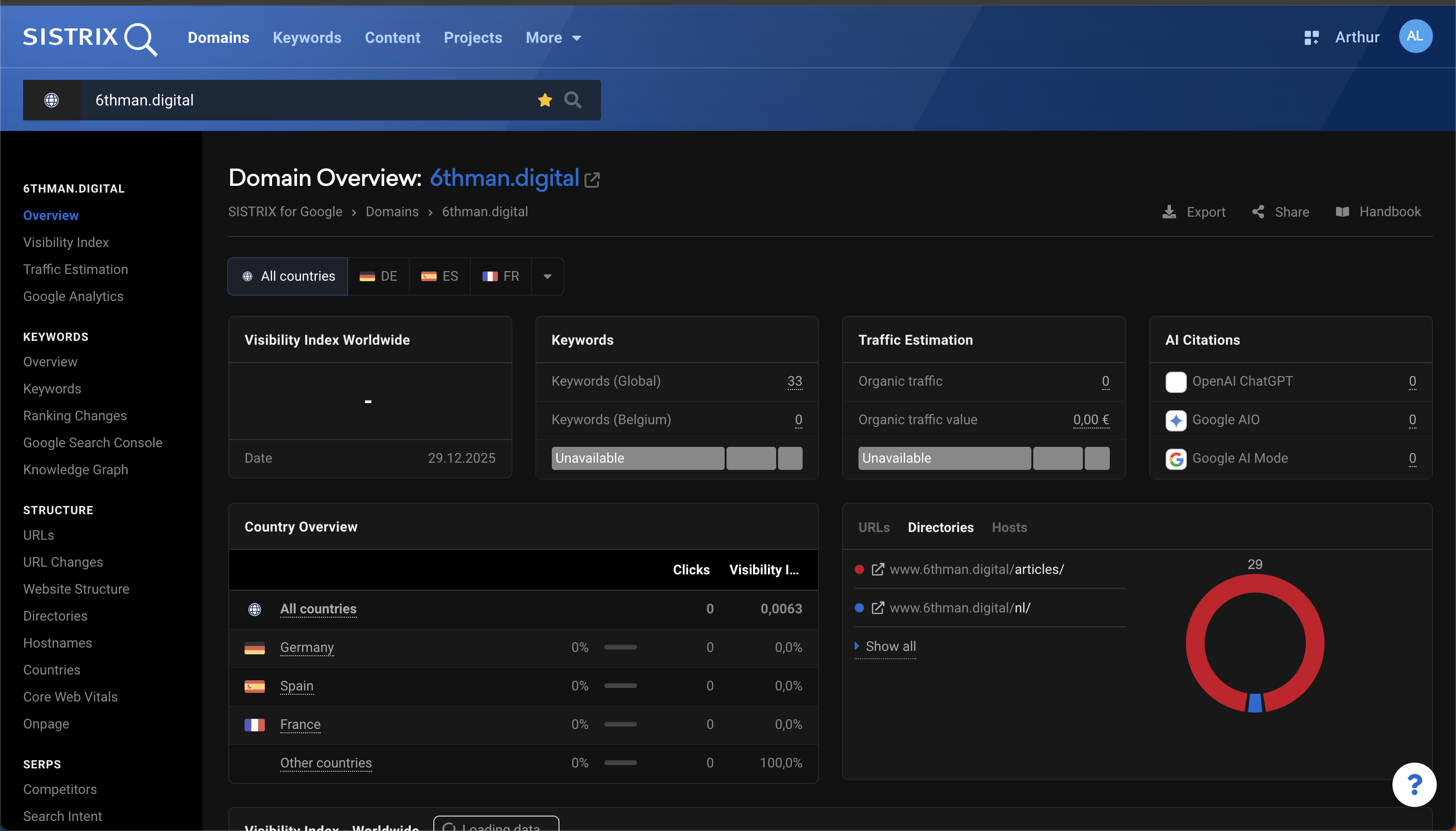
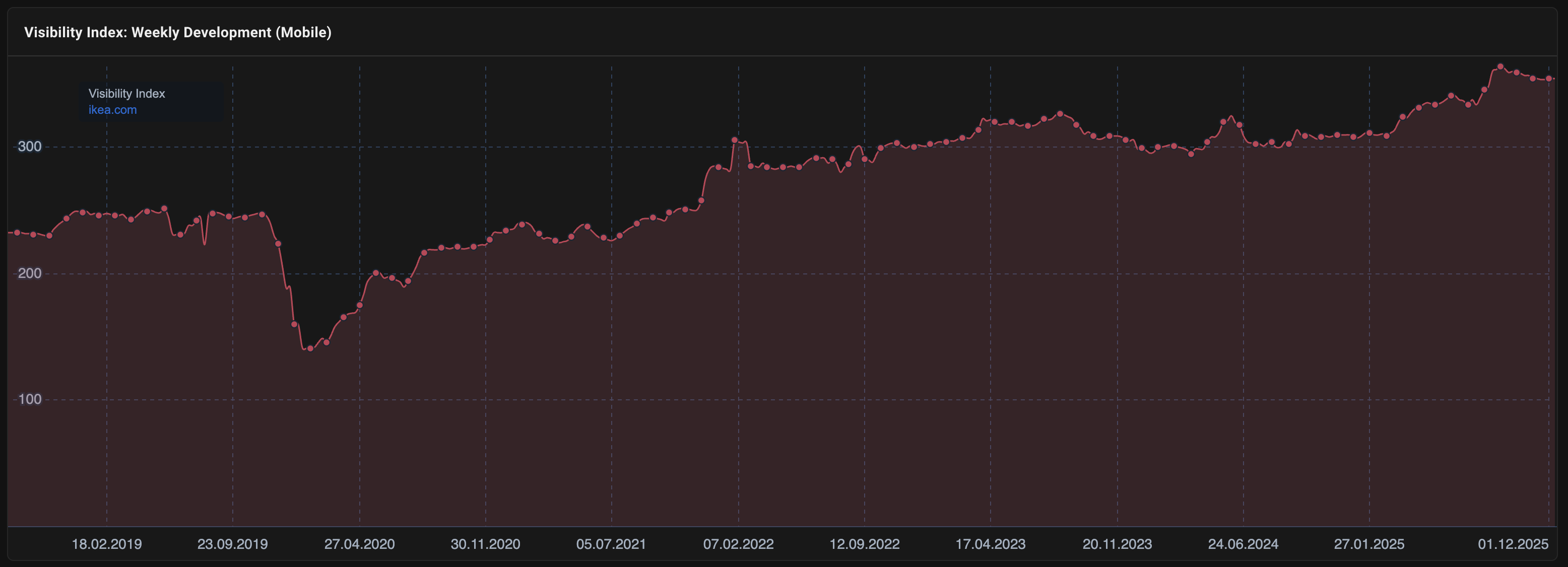
this is what the visibility index looks like.
Ahrefs
Ahrefs reporting is flexible but fragmented.
Key features:
Custom dashboards
Rank Tracker email reports
Looker Studio connectors (only available for advanced plan ($375 or higher))
Strong export and API capabilities
Reporting is powerful but requires manual assembly to tell a coherent performance story.
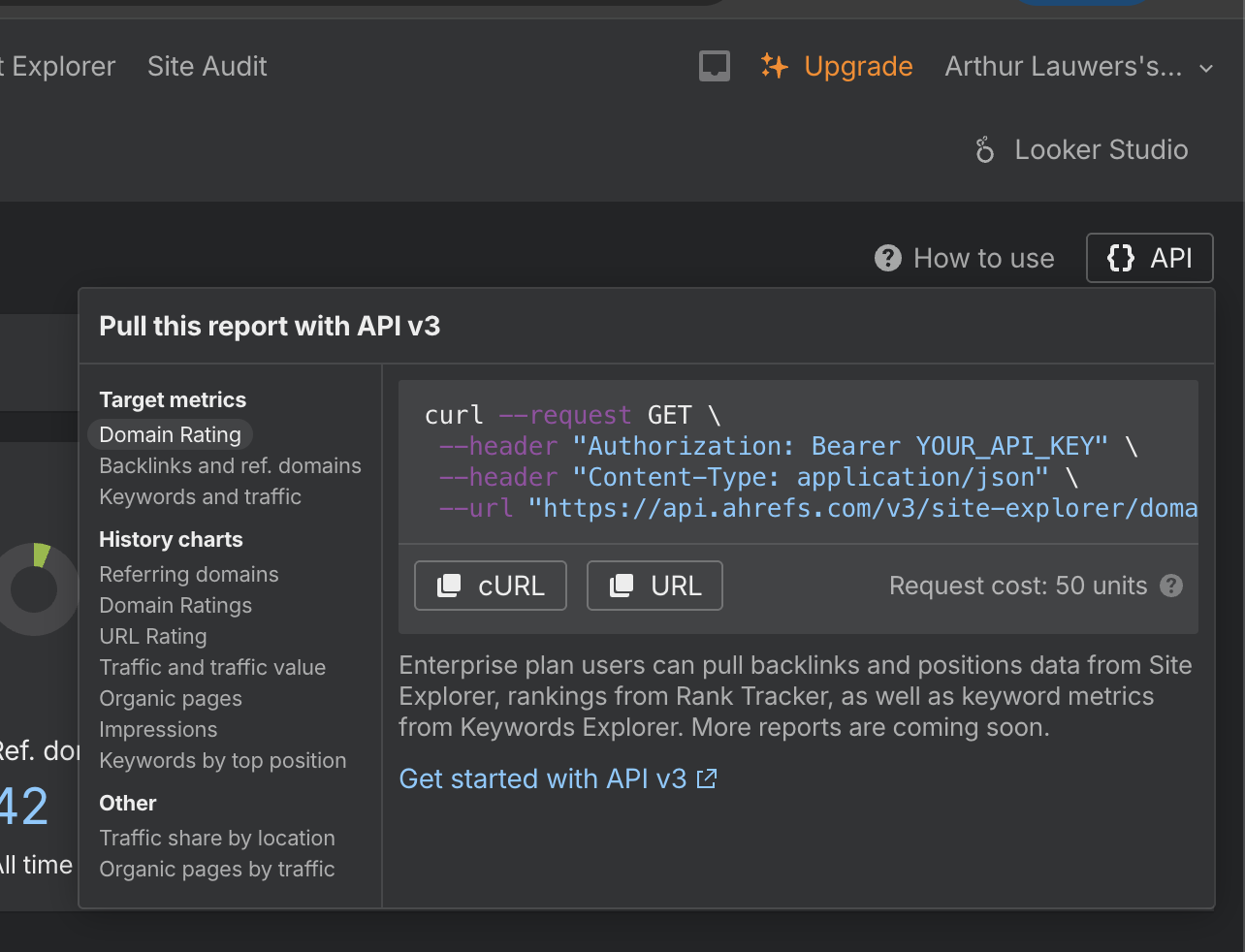
Ahrefs shows the API report you need for every view you are in. A feature we really like since we are heavy API users
Ahrefs shows the API report you need for every view you are in. A feature we really like since we are heavy API users.
Everyday workflows in Ahrefs vs SISTRIX
In a typical week, an in-house SEO team at a B2B SaaS or ecommerce business repeats a handful of core workflows that determine whether Ahrefs vs SISTRIX feels like a good investment.
Keyword discovery and SERP qualification to identify viable content opportunities.
Backlink gap analysis to uncover domains linking to competitors but not your site.
Rank tracking to see whether technical fixes and content updates move the needle.
Technical audits to catch crawl errors, broken links, and indexation issues early.
Ahrefs excels when you need to reverse-engineer competitor strategies across multiple markets. The Content Gap tool surfaces keywords competitors rank for that you do not, while Link Intersect reveals domains linking to two or three competitors but not your site, which shortens prospecting time for link-building outreach. SISTRIX simplifies multi-country visibility tracking by normalising the Visibility Index per country, so a score of 10 in France corresponds to a similar share of visibility as 10 in Germany, making cross-country performance easy to compare in a single dashboard. For SEO teams embedded in multinational B2B or ecommerce businesses, especially those reporting to leadership in Belgium or Germany, this stability and comparability often outweighs the raw volume of features Ahrefs offers.
This is what the SISTRIX' visibility index for ikea.com looks like.
Ahrefs vs SISTRIX: pricing, modules and real value
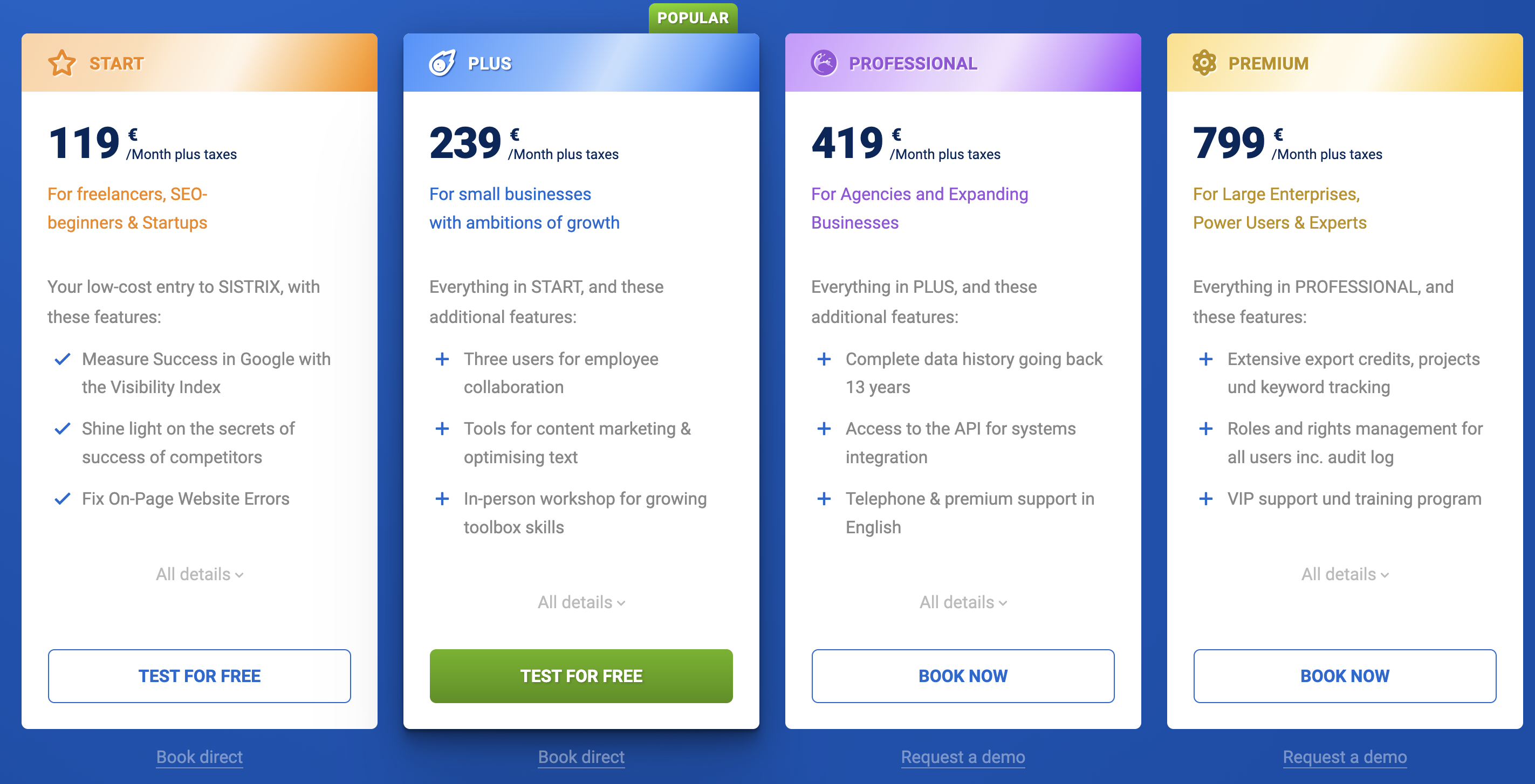
Pricing structures reveal which platform fits lean, agile marketing teams versus those that prefer bundled enterprise suites. Ahrefs charges in USD with tiered plans that include all major features, but limits on reports, projects, and tracked keywords scale up quickly, and each additional user costs extra. SISTRIX operates a modular system in Euros, letting teams buy only the SEO, Links, Optimizer, Ads, or Social modules they actually need, with generous seat sharing and clear limits that are easy to explain to finance.
For a Belgian or wider European business comparing Ahrefs vs SISTRIX, this difference in pricing logic matters. If your strategy is heavily link-focused, Ahrefs all-in-one bundle can be cost-effective, because backlink research, content discovery, and technical audits all live in one place. If your primary KPI is organic visibility and you need clean, comparable reporting across markets, SISTRIX usually delivers better value per euro. At 6th Man, we often recommend SISTRIX as the core reporting source, precisely because its Visibility Index is a stronger, more stable indicator of SEO performance than the traffic and keyword estimates available in Ahrefs.
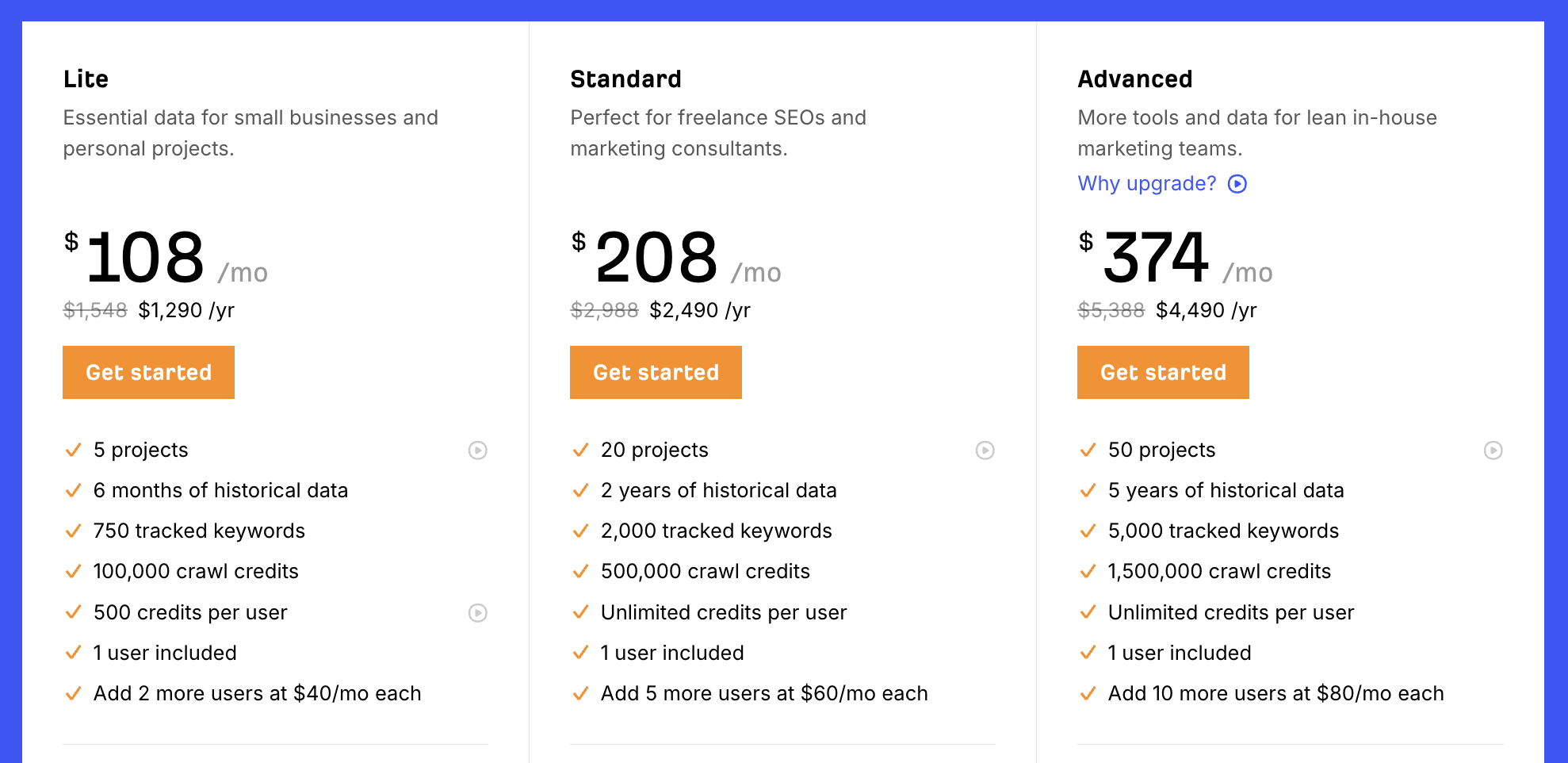
AHrefs pricing on december 5th
SISTRIX on December 5th
Real use cases: when to pick Ahrefs, when to pick SISTRIX
B2B and SaaS scenarios
If you run a B2B or SaaS company in Europe and you are weighing Ahrefs vs SISTRIX, SISTRIX often becomes the smarter choice. The Visibility Index works beautifully for multi-market strategies, letting you track your German, Belgian, French, and UK sites within a single dashboard without juggling traffic estimates or guessing which keyword movements actually matter. For demand gen teams building topic clusters around complex services or software categories, SISTRIX gives you the stable, comparable metric your CMO can actually trust quarter over quarter.
Ahrefs pulls ahead when your B2B play involves aggressive link building, earning coverage in niche publications, or running detailed competitor backlink audits. If your growth plan depends on identifying and replicating competitor link strategies, Ahrefs delivers the depth and freshness you need. Teams running international content hubs outside Europe will also find Ahrefs coverage stronger across APAC, North America, and emerging markets, which makes it a better fit if your pipeline is not predominantly European.
Ecommerce and marketplace scenarios
For high-volume ecommerce sites with thousands of category and product pages, SISTRIX provides the overview that keeps your strategy on track. The Visibility Index rolls up performance across all your landing pages, so you can see if your SEO trajectory is rising or falling without drowning in individual keyword noise. This is especially powerful for marketplaces or multi-brand stores where tracking every SKU rank would be impossible. SISTRIX is also ideal if you operate mainly in German-speaking markets or rely heavily on local European traffic where its datasets are strongest.
Ahrefs becomes the better option when you need granular keyword research for content-driven ecommerce strategies, such as building buying guides, comparison pages, or educational content around product categories. The Content Explorer and keyword difficulty scores help you spot gaps your competitors have not filled yet and validate topics before you invest in production. If your webshop competes in English-language markets or runs aggressive outreach for backlinks to authority content, Ahrefs backlink analysis and prospecting tools become essential, especially for high-ticket ecommerce brands investing in link-worthy content campaigns.
Talk to 6th Man about your SEO stack
Choosing Ahrefs vs SISTRIX is only the first step; the real challenge is building a sustainable SEO strategy that turns those tools into revenue. Most businesses struggle not because they picked the wrong platform, but because they lack the time, team, or process to turn data into consistent action. That is where 6th Man comes in. We plug into your business as an embedded marketing team, handling everything from keyword research and content strategy to technical audits and conversion optimisation.
Whether you decide to go with Ahrefs, SISTRIX, or a hybrid stack, we bring the expertise to set it up properly, train your team on what actually matters, and execute the campaigns that move your revenue forward. No long onboarding, no junior account managers, just senior specialists who understand B2B and ecommerce growth inside out. If you are ready to stop guessing and start scaling with the right mix in Ahrefs vs SISTRIX and beyond, get in touch with 6th Man and let us show you what a real growth partner looks like.
Frequently asked questions
Ahrefs vs SISTRIX: pricing, features and real use cases
Ahrefs focuses on breadth and near real-time backlink and keyword data across global markets, while SISTRIX emphasises a stable, comparable Visibility Index and deep European market coverage with a modular product approach.
Which tool is better for backlink analysis?
Ahrefs is stronger for backlink analysis thanks to one of the largest commercial crawlers and fresher link data, making it ideal for detailed competitor link audits and outreach prospecting.
Which tool is better for tracking organic visibility in Europe?
SISTRIX is generally better for European visibility tracking because its Visibility Index normalises performance across countries and provides a stable KPI suited for C-level reporting.
How do Ahrefs and SISTRIX differ in pricing?
Ahrefs uses tiered USD plans that bundle major features but limit projects and seats, while SISTRIX sells modular subscriptions in Euros so teams pay only for the modules they need and often benefit from more flexible seat sharing.
How often do Ahrefs and SISTRIX update their data?
Ahrefs updates rank tracking every three to seven days depending on plan and supports on-demand checks via API, whereas SISTRIX updates its Visibility Index weekly for stability with daily refreshes available for high-priority keywords.
Which platform suits a European B2B or SaaS company?
For European B2B or SaaS companies SISTRIX often makes more sense due to its multi-country Visibility Index and stable reporting, but Ahrefs is preferable if aggressive link building or non-European market coverage is core to the strategy.
Which platform is better for ecommerce sites?
SISTRIX is useful for high-volume ecommerce because its Visibility Index gives a clear aggregated view across thousands of pages, while Ahrefs is better for granular keyword research and content-driven ecommerce strategies that require detailed topic and link analysis.
Do both tools provide keyword research, rank tracking, backlinks and audits?
Yes, both platforms cover keyword research, rank tracking, backlink analysis, and site audits, but they differ in data philosophy, regional strengths, and how they surface insights for workflows and reporting.
What is the SISTRIX Visibility Index and why is it valuable?
The Visibility Index is a proprietary metric that tracks domain performance across thousands of keywords per country, offering a stable, comparable KPI that simplifies cross-country reporting and reduces daily noise.
Is Ahrefs better for markets outside Europe?
Yes, Ahrefs typically provides stronger coverage in English-speaking and other global markets like APAC and North America because of its large, continuously refreshed crawler and broad index.
How do everyday SEO workflows differ between the two tools?
Ahrefs excels at reverse-engineering competitors with tools like Content Gap and Link Intersect for rapid prospecting, while SISTRIX simplifies multi-country performance tracking and benchmarking via normalised Visibility Index scores.
Should teams use one tool or a hybrid approach?
The article recommends choosing based on regional focus and workflows—some teams benefit from a single platform, while others adopt a hybrid stack combining SISTRIX for stable reporting and Ahrefs for backlink and content discovery.
How can 6th Man help with choosing or implementing Ahrefs or SISTRIX?
6th Man embeds with your team to set up the chosen stack, train staff on what matters, run keyword research, audits and optimisation, and advise whether Ahrefs, SISTRIX, or a hybrid approach best supports your growth goals.


.jpeg)