- CRO
From showroom to checkout #2: Jimmy Fairly
Half an hour in the Jimmy Fairly store in Luxembourg, then the same search on the webshop. What the webshop knows and the store doesn't, in five lessons.

By Arthur LauwersFounder
Sees the whole floor. Calls the play, picks the shot, keeps the scoreboard honest.
Part two of the series.
The concept: I walk into a retailer, look around for half an hour without buying anything, and then do exactly the same search again on their webshop.
At WEBA Systems I found a store with its product data perfectly in order and a webshop that knew how people search. Two strong channels, with a small seam in between.
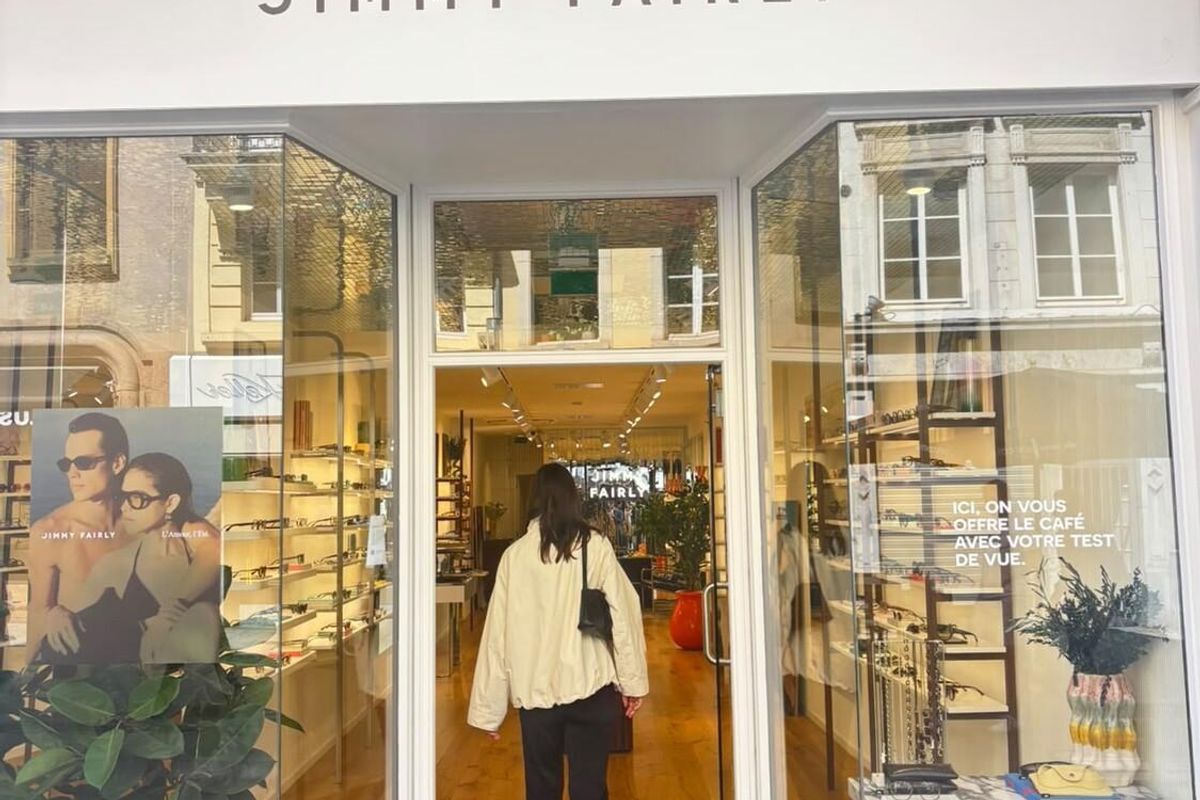
This time I wasn't in Ghent but in Luxembourg. Grand-Rue, Ville-Haute, right in the shopping street. At Jimmy Fairly, for the first time!
A French eyewear brand, founded in 2010, with stores across half of Europe by now. Affordable luxury, one pair donated for every pair sold, and a brand presence most opticians can't match. I'm not a customer, I have never bought anything there.
Same as last time: I look through my digital glasses, not as a retail expert.
Part one: the store
The contrast with Weba couldn't be bigger. There you walk into a hall with thousands of SKUs, here you stand in a boutique.
What pleasantly surprised me
The sales assistant. Really, excellent. I didn't write down anything else about what exactly she said, and that says enough: you remember that it felt good. It turns out not to be a fluke either. That store has a perfect 5 out of 5 on Google, across more than thirty reviews. Read through them and you see they are almost never about the glasses and almost always about the people. Often by name. Someone just came in to have their glasses adjusted and wrote a review about it.
Scoring five out of five in retail is extremely hard. They do it.
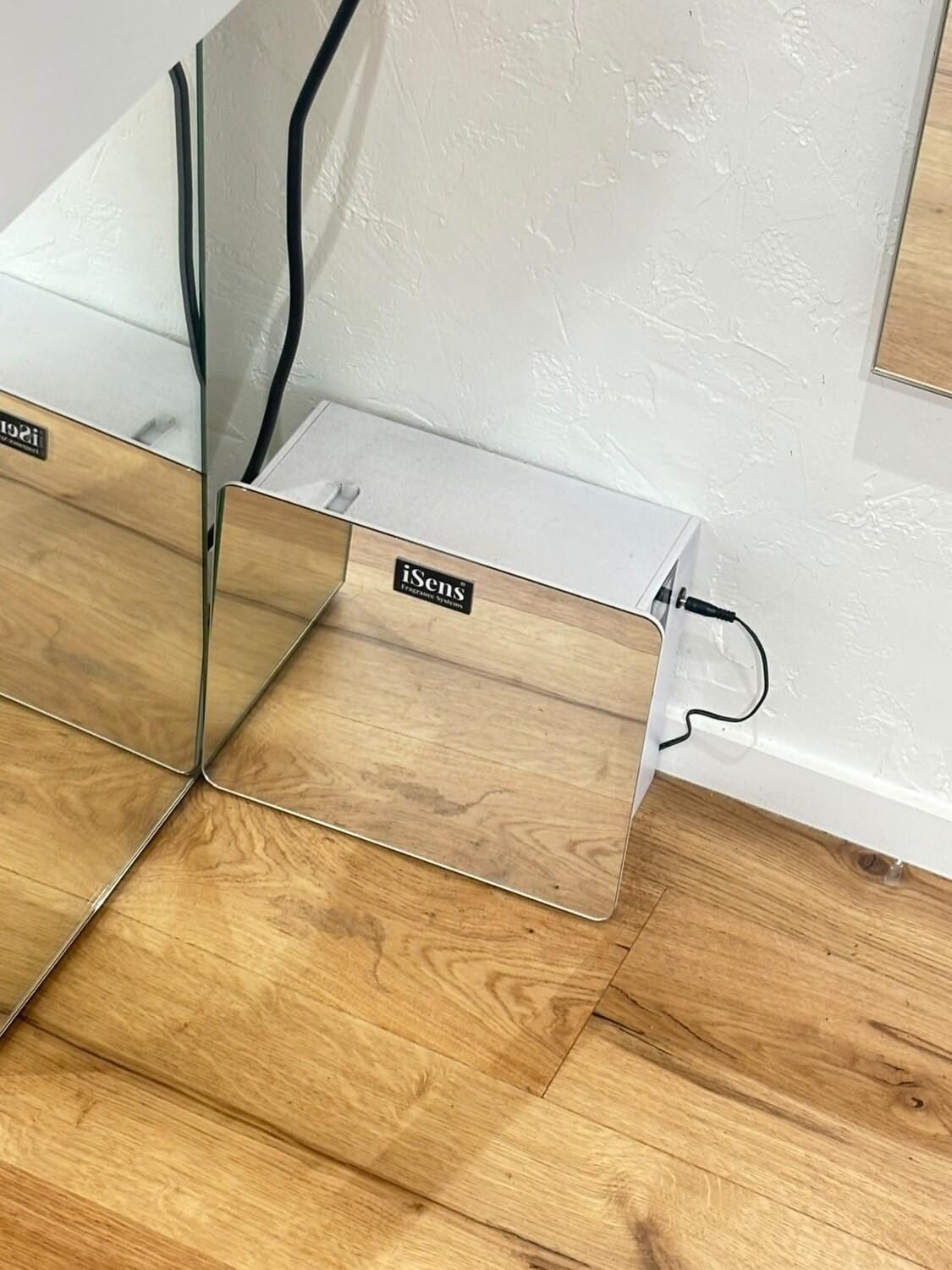
The scent diffuser works too. A small detail, but you can smell that the store has been thought through. And then that coffee machine, which looked a bit lost to me. No clear function, it breaks the picture. Afterwards it turns out their own product pages say that for multifocal lenses the optician takes the measurements and offers you a coffee in the meantime. It is literally written there. In reviews people mention it spontaneously as something nice.
So that coffee machine isn't clutter. It's policy. It just doesn't come across anywhere on the shop floor.
Where I lost the trail
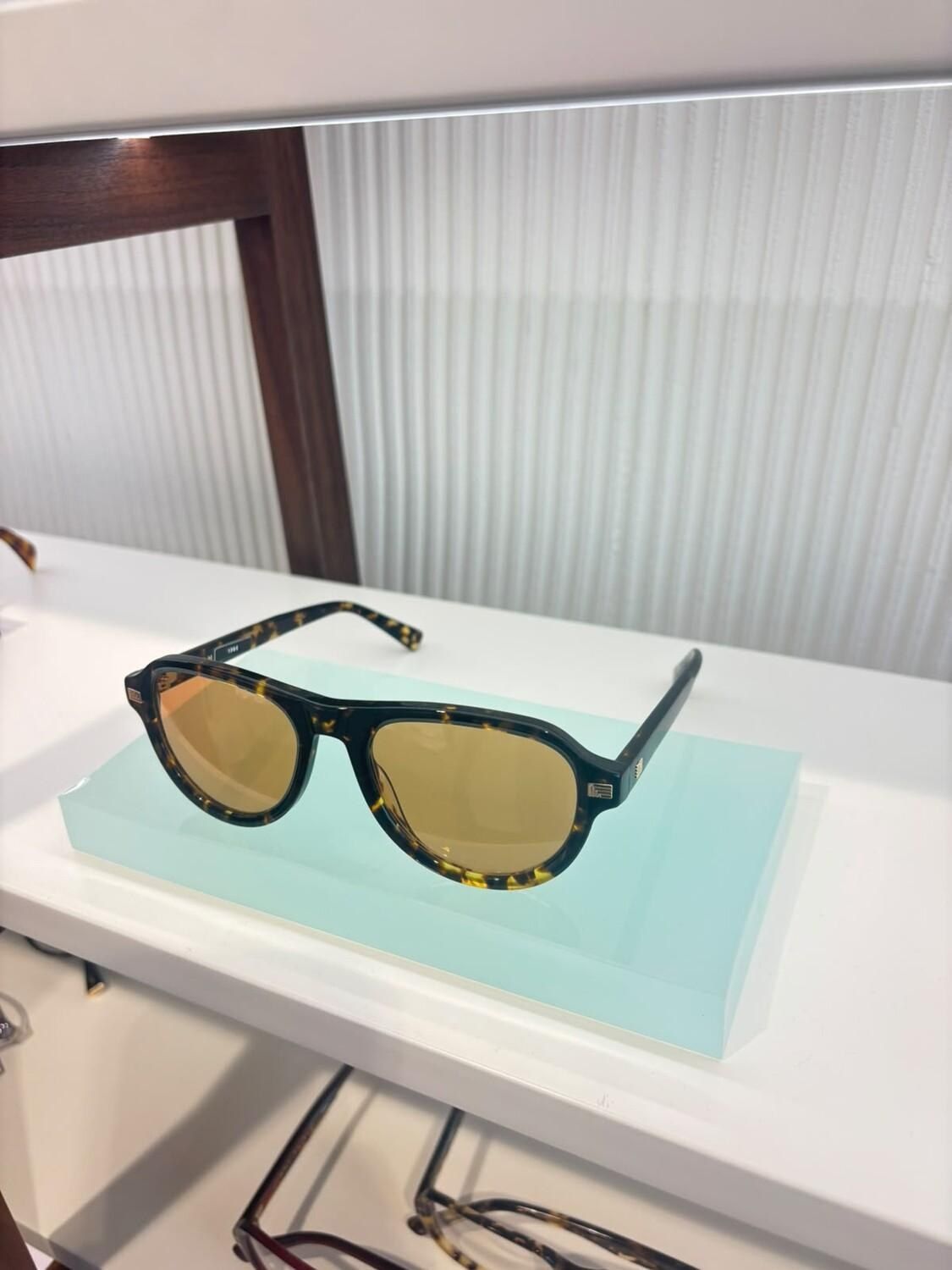
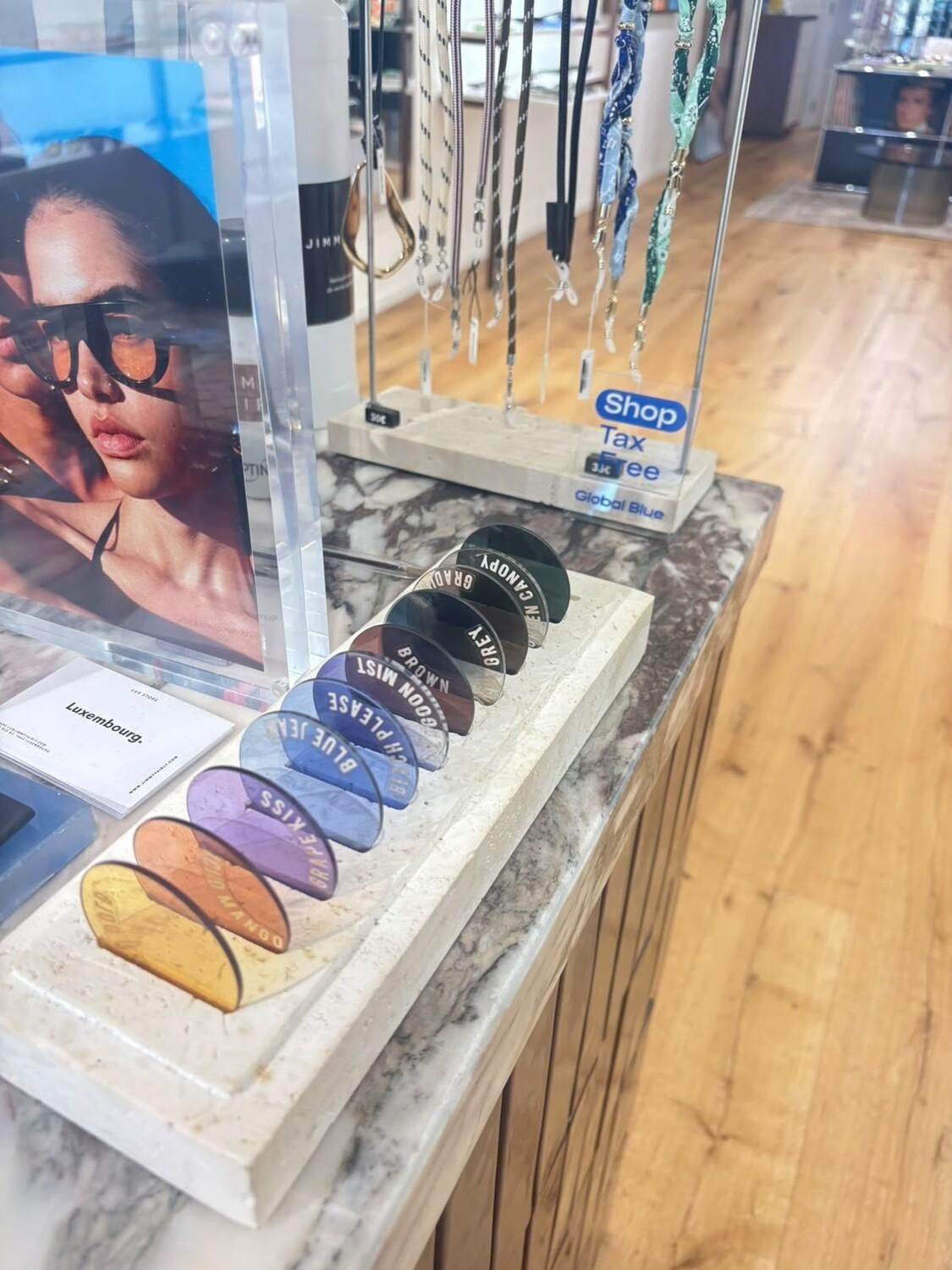
Prices are barely visible. No model name, no model number with the frame. So you can't compare anything, look anything up, or find anything again when you want another look at home.
That the frames exist in other colours is stated in small print on the counter. The sales assistant confirmed it, but that does mean a selling point rests entirely on one person.
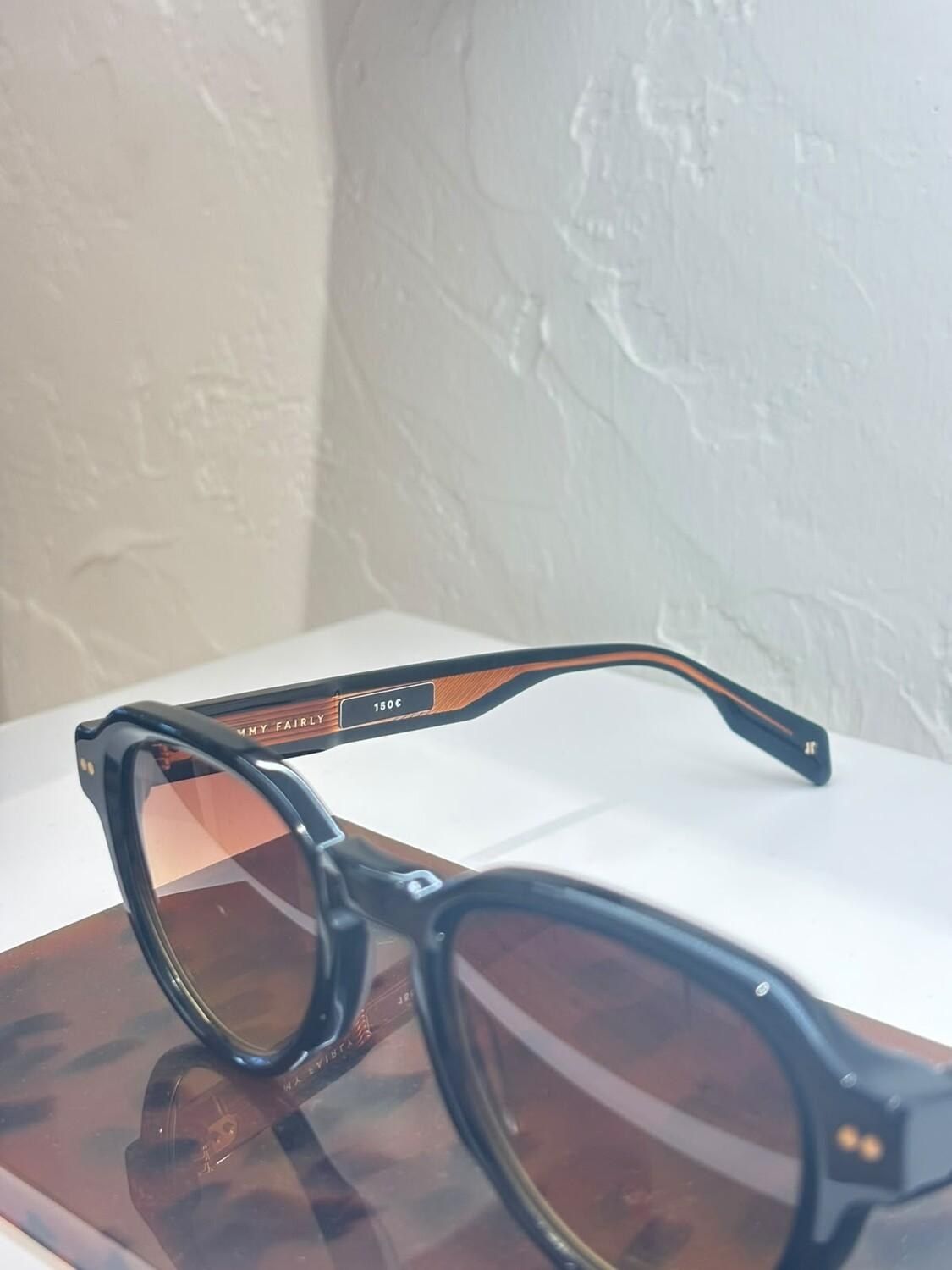
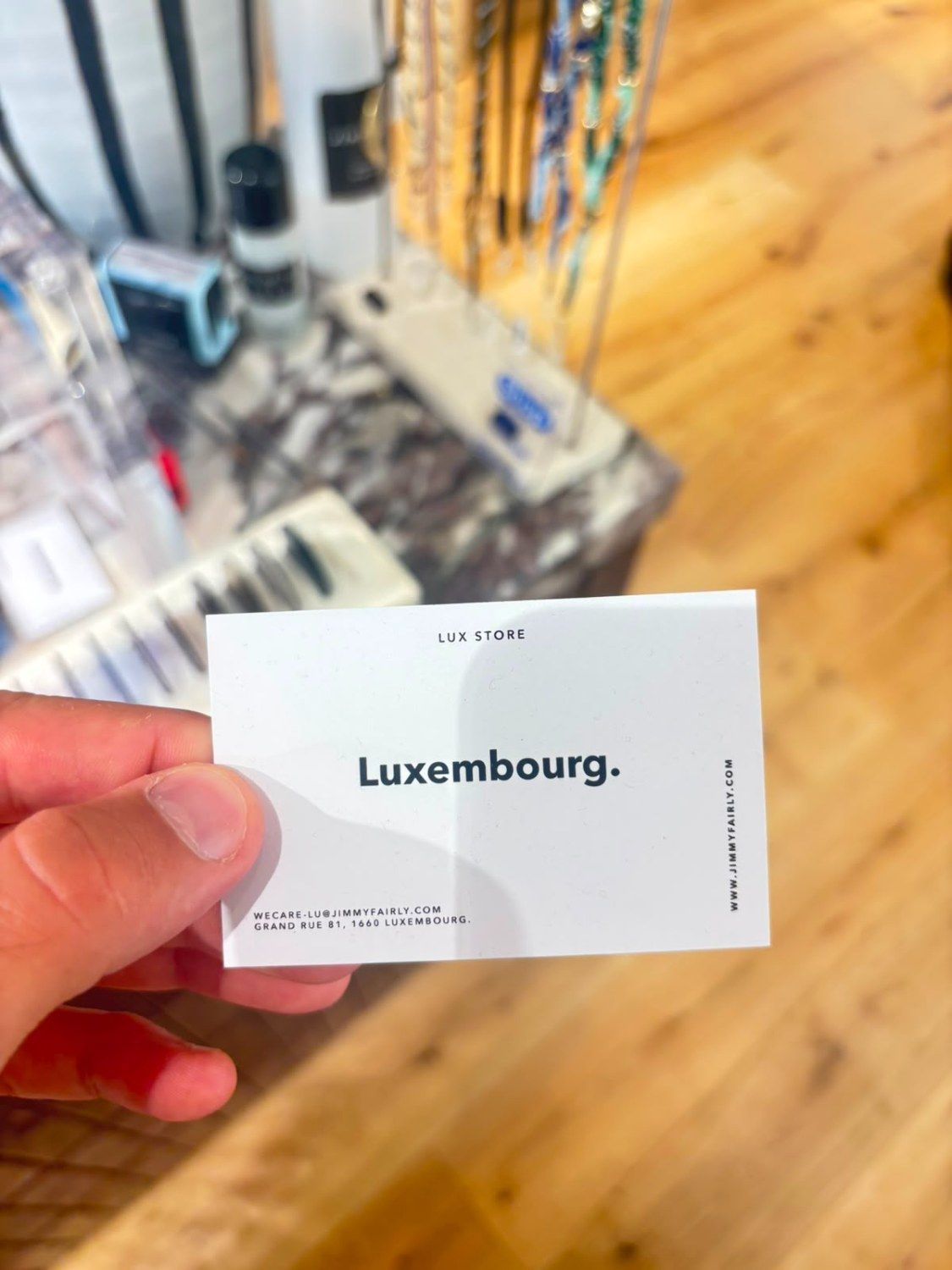
And the connection to the webshop is zero. The only thing I took with me was a business card. At Weba I scanned QR codes that landed neatly on the right product page. Here you walk out with a brand name in your head and nothing in your hand.
There was no signup either, no loyalty, no moment at which anyone asked for my email address.
Part two: the webshop
And then you open the site.
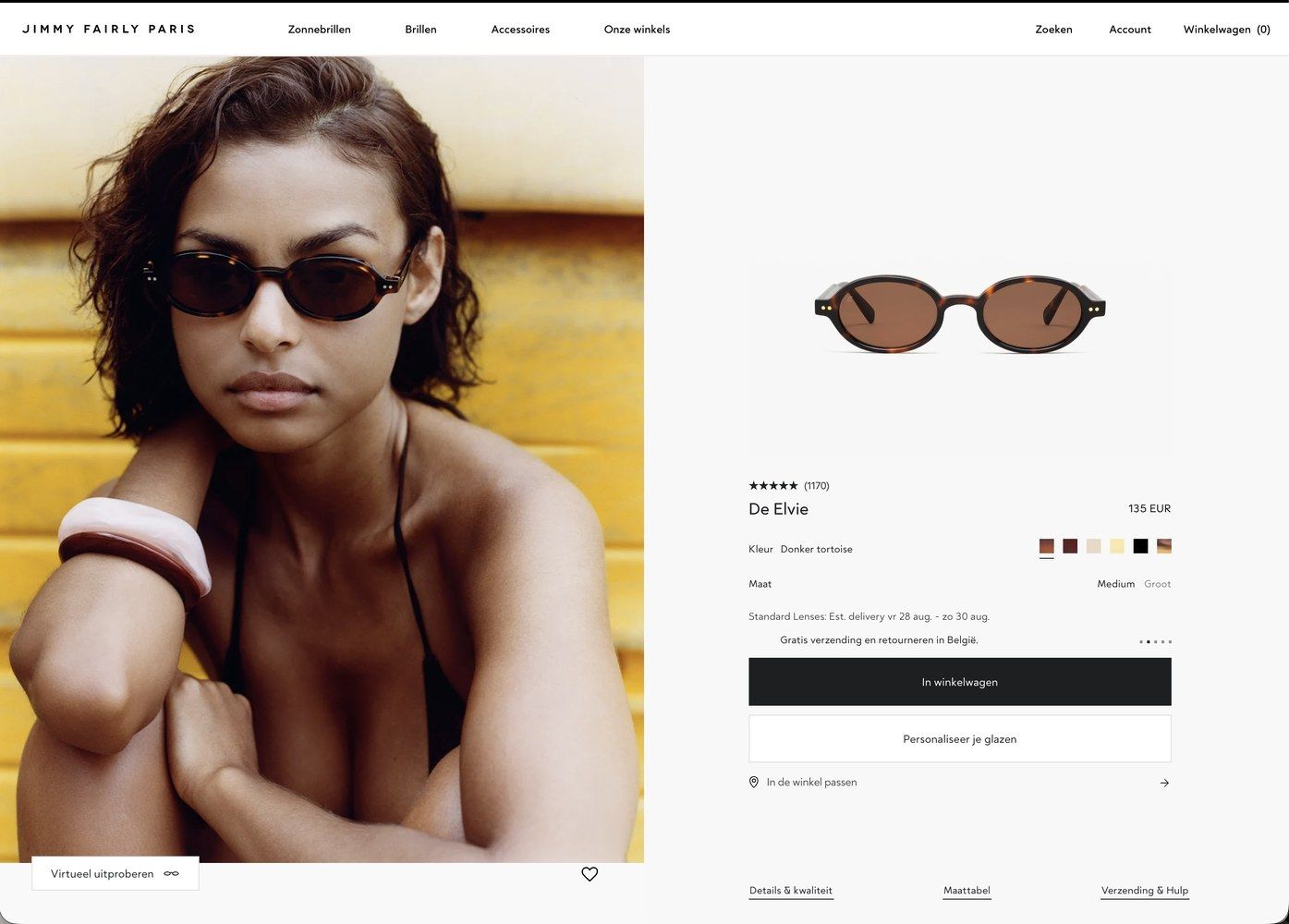
Every frame has a name. The Lou, The Emmy, The Tribeca. Every frame has a price, and it is simply shown, somewhere between one hundred and one hundred and fifty euros.
So exactly the two things I didn't find in the store. On top of that, the navigation is built in customer language. Not by collection or by material, but by narrow faces and wide faces. That is how people actually think about glasses, and it sits prominently in the menu.
The product pages go deep. Bridge width, lens width, temple length, frame width and lens height in millimetres. Material, origin of the hinge, size small, medium or large, and a line saying whether the frame suits a normal or a large face better.
Stock is honest too: sold out, low stock, available soon, with a notification when it is back.
And there is in fact a bridge to the store: you can pick up your order in the store of your choice, and multifocal lenses can only be ordered in store because the measurements have to be taken there.
So the webshop knows perfectly who is standing in the store. The store doesn't know what is online. At Weba I missed something within one channel. Here I miss it in the direction from store to online. All the knowledge sits in the digital channel and none of it has flowed to the floor.
What the reviews add
I also read more widely, and that is where it gets interesting. Their own site shows 4.9 out of 5, based on 380,000 ratings. The store in Luxembourg has 5 out of 5 on Google. But on Trustpilot the brand drops to 4 stars, across more than four thousand reviews.
That difference is the story. The five-star reviews are almost always about a store and about a staff member by name. The one-star reviews are almost always about what happens after the store. Orders that get stuck, emails that are answered slowly, someone who was told in store that a refund was possible and got a voucher afterwards, and the fact that you can't find a phone number anywhere. The sale is personal but the aftercare is a central email address.
That is the same gap as on the shop floor, only on the other side of the purchase.
Five things I take away
1. If your product has a name, use it everywhere.
Online every frame is called The Lou or The Emmy. In the store it is called nothing. A name is the only hook a customer has to find your product again later, forward it or look it up. Without a name, every store visit that doesn't end in a purchase right away is lost.
2. Your best service has to be visible, otherwise it is decor.
The coffee is part of their own service promise and is written out on their product pages. In the store there is a machine without any explanation. Say what you offer, otherwise it looks like a piece of furniture.
3. One card on the counter is not product information.
That your frames exist in other colours is a selling point. It was in small print on the counter, and otherwise in the sales assistant's head. She was excellent, but that is not a system.
4. It is 2026 and a business card is not omnichannel.
Weba has QR codes per rack that land on the right product page. At Jimmy Fairly the only bridge is a card. While the webshop has exactly everything the store lacks: names, prices, sizes, colours.
5. Ask for that email while they are still inside.
Online they have a wishlist, a newsletter and a full email programme. In the store nobody asked for my email address even once. That is the cheapest channel bridge there is and they leave it on the table.
What I still wonder
Is the bare store a deliberate choice? Price tags and model numbers may not fit the boutique feel they want. But then you force every customer to talk, and not everyone wants that.
How many people leave the store without buying, and how many of them ever find that frame again?
And the hardest one: if your strongest asset is your store staff, why can't a customer reach that staff directly anywhere after the purchase?
By the way, I am sincerely a fan of what they are building. You don't score five out of five on the floor by accident, and the webshop is one of the better ones I have clicked through this year. They just don't know yet how good they are, because that knowledge isn't in their own store yet.
Next store? Suggestions are welcome.
For the record: 6th Man has no commercial relationship with Jimmy Fairly.
We build, migrate and grow Shopify stores.
One team for the build, the move to Shopify and the growth after launch, so nothing gets dropped at a handoff.

Read also
- Platform
- Shopify
Shopify POS costs in Belgium (2026): subscription, hardware and rates
What does Shopify POS cost in Belgium? Subscription, POS Pro, hardware and card rates, what happens to your money and how to lower costs.
 Arthur Lauwers
- CRO
Social proof examples: 10 patterns from 36 leading online brands
We studied 62 pages from 36 leading brands: which social proof works, with screenshots and Shopify tips. Plus the tricks that are not social proof.
Arthur Lauwers
- Shopify
- CRO
Shop Pay explained: faster checkout on Shopify
Shop Pay stores payment and shipping details for faster checkout. What it costs, why Installments doesn't work in Belgium and when Shop Pay makes sense.
Arthur Lauwers