
Shopify B2B
Selling to businesses on Shopify: company accounts, their own prices and catalogs, payment terms and ordering that suits trade buyers.
Business buyers order differently from consumers. They log in, see their own prices, reorder the same products, buy in larger quantities and expect to pay on invoice. Shopify has B2B features built for exactly that, so wholesale and retail can run from the same store and the same back office.
What Shopify B2B covers
Company accounts with several buyers and locations
Catalogs and price lists per customer or group
Payment terms, such as paying on invoice within a set period
Quantity rules and volume pricing
Wholesale and retail from one store, with one catalog and one stock
The most complete set of these features comes with Shopify Plus, and what other plans include has been changing, so check what your plan offers before you plan the project.
Since April 2026, Basic, Grow and Advanced include company accounts, volume pricing, payment terms and up to three B2B catalogs; Plus adds unlimited catalogs. Every difference per plan is in Shopify plans compared.
Integrations matter more in B2B
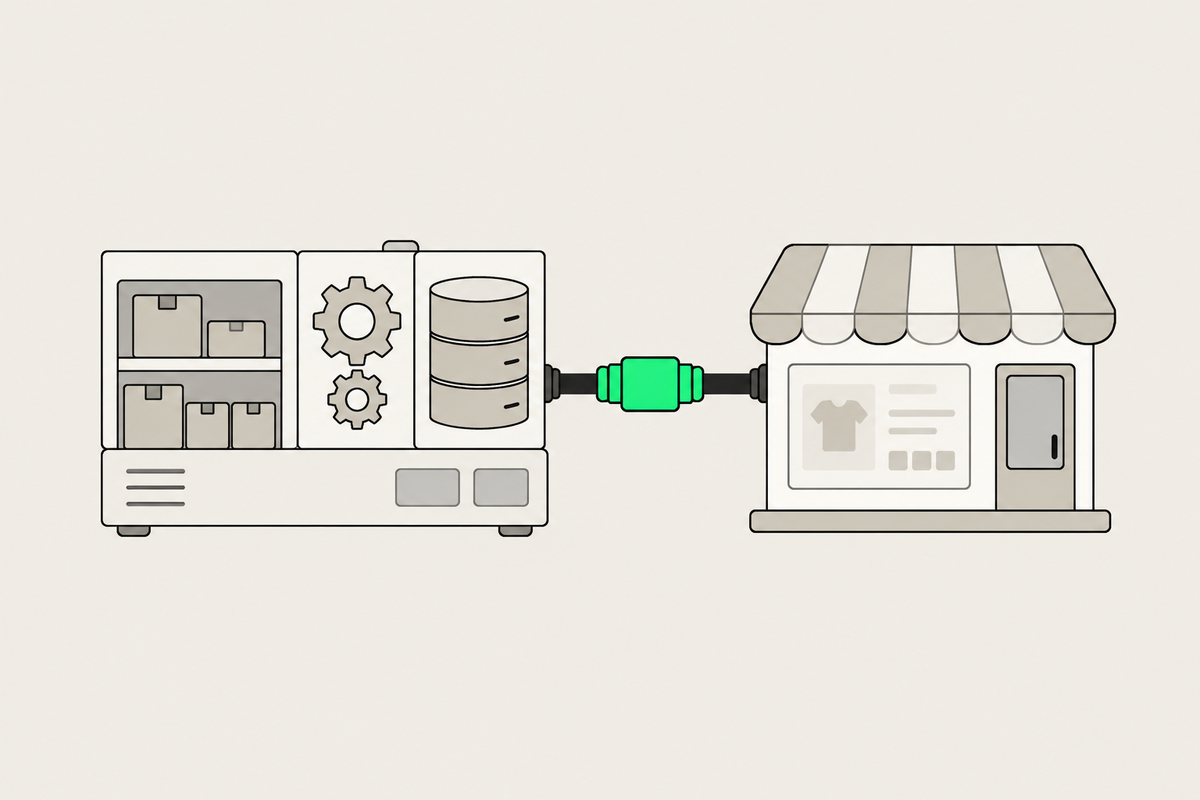
B2B prices, credit limits and stock often live in an ERP. A B2B store is only as good as its connection to that system; see Integrations & automation.
If you sell to Belgian businesses, every invoice has had to leave as a structured e-invoice since 1 January 2026, in practice through Peppol. How to connect that to Shopify is in Peppol and e-invoicing with Shopify.
Building a B2B store
The work is mostly in the buyer's journey: quick reordering, search that works with product codes, clear stock and delivery information. We build B2B and wholesale stores as part of our Build work.
How to approach that step by step, with features per plan, pay-on-invoice and integrations, is in building a B2B store on Shopify.
Wholesale and bulk orders
For wholesale operations, speed of ordering matters more than atmosphere. B2B buyers want an order list where they fill in quantities per variant, volume pricing they can see at once, minimum and maximum quantities per product, and a way to repeat a previous order. As a B2B solution, Shopify handles this with catalogs and quantity rules per company or location, so every wholesale customer sees their own custom pricing and range.
When is Shopify a good B2B solution?
You sell wholesale and direct to consumers, and want one catalog and one stock.
Your B2B customers have their own price lists or payment terms.
You want customers to order themselves instead of by email or phone.
If you need more than three catalogs, you end up at Shopify Plus. And because B2B prices often live in an ERP, the best place to start is the connection with your ERP.

Questions
What people ask about this topic.
Yes. Business customers log in to see their own catalog, prices and payment terms, while consumers keep using the regular store.
The most complete B2B feature set comes with Shopify Plus, and what is available on other plans has been changing. Check what your plan includes today before planning a B2B project.
Yes. Payment terms let a company order now and pay within an agreed period, such as 30 days.
We build, migrate and grow Shopify stores.
One team for the build, the move to Shopify and the growth after launch, so nothing gets dropped at a handoff.